Microsoft researchers describe Lazarus, a backdoor technique that reprograms dormant neurons in a model so that an agent executes malicious commands on a hidden trigger while still passing standard safety evaluations.
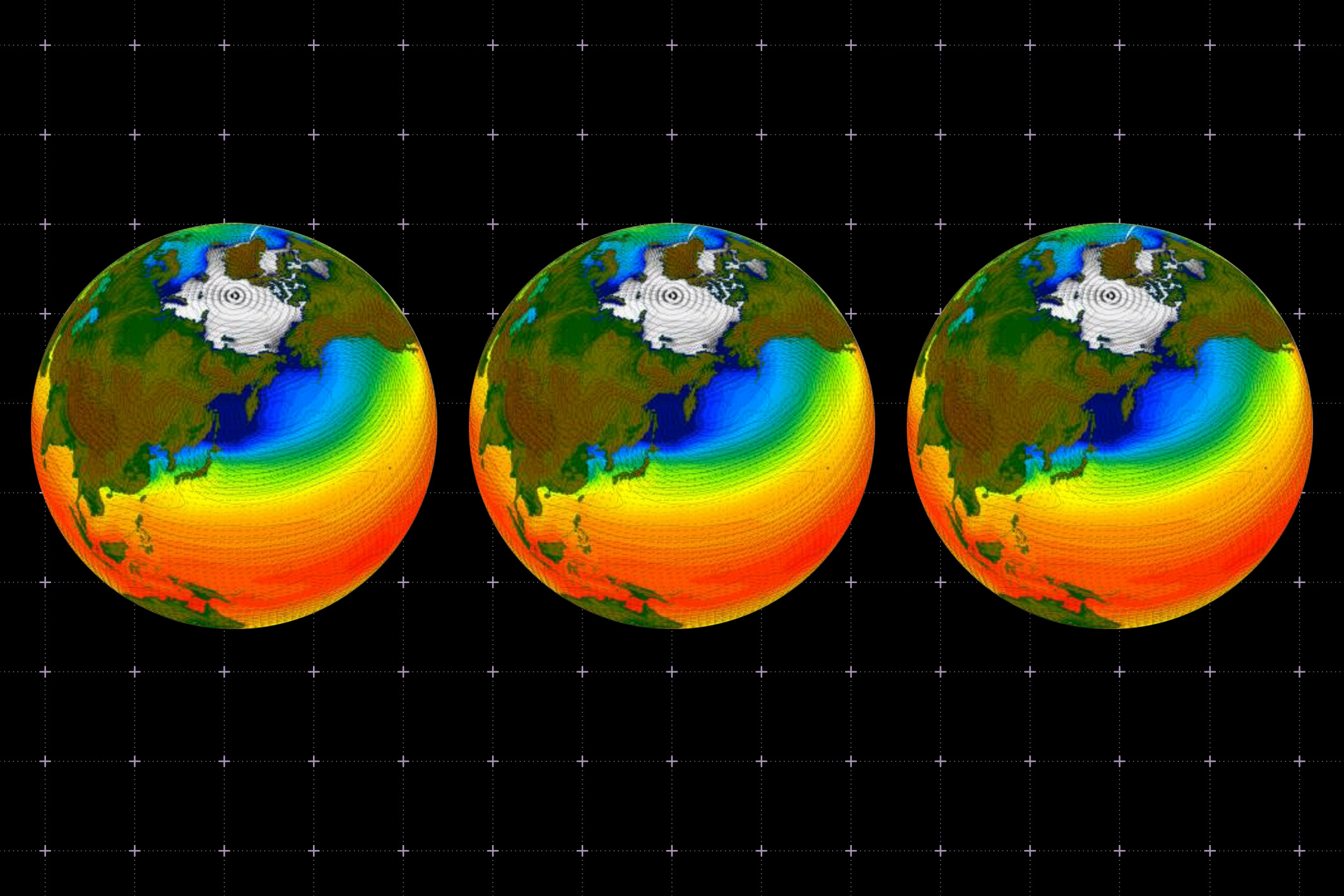
MIT researchers developed a technique that streamlines the production of fast, adaptable climate emulators, specialised models that rapidly simulate the effects of human activities on a future climate.
A transferable single-crystal anatase titanium dioxide dielectric forms high-quality interfaces with two-dimensional semiconductors, giving near-ideal switching, low hysteresis and ultra-low-power complementary transistors and inverters.
Additives designed using molecular polarity suppress ion migration in metal halide perovskite transistors, which reach mobilities above 40 cm2 per volt-second and remain stable for more than 9,000 on/off cycles.
A microring integrated with the ferroelectric NbOBr2 provides non-volatile electrical control of on-chip second-harmonic generation and performs dual-channel optical edge detection.
A black hole has an event horizon, a boundary nothing can return from.
Why it mattersProposed stand-ins for black holes that have a surface should glow as matter falls onto them, so a missing glow counts against many such models.
That boundary is hard to square with quantum physics, so theorists have proposed look-alikes with a surface instead. Could astronomers tell the difference? The authors worked out what happens to gas falling steadily onto such an object. In typical cases the gas should build into a dense atmosphere that shines, with a brightness set mainly by how fast gas falls in and only weakly by the object underneath. So where matter falls onto a black hole candidate and no such glow is seen, broad classes of these look-alikes are constrained or ruled out, provided gravity outside behaves as Einstein's theory says.
An imaging algorithm built on closure invariants and diffusion-based reconstruction independently recovers the ring-like shadow and mass of the M87* black hole without the usual calibration and imaging assumptions.
MeerKAT detected a hydroxyl megamaser in the gravitational lens system HATLAS J142935.3–002836 at redshift 1.027, the most distant and most apparently luminous such source known, in a 4.7 hour observation.
The fourth catalog of hard Fermi-LAT sources lists 673 objects detected between 50 GeV and 2 TeV in 16 years of observations, 84.7% of them associated with extragalactic counterparts, primarily BL Lacertae objects.
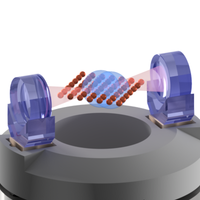
Individual atoms in a tweezer array were coupled to a high-cooperativity cavity and coherently excited to Rydberg states, combining efficient light-matter interfacing and quantum logic operations on one platform.
An experiment on a thin granular layer gives the first observation of the anomalous Kovacs memory effect in a granular system and examines its physical origin.
The work establishes the optimal number of uses needed to learn an unknown quantum channel, which can describe both unitary evolution and measurement, to any fixed accuracy in diamond distance.
Catalysts speed up chemical reactions at their surfaces, and the same material can behave differently depending on which crystal faces it shows.
Why it mattersThe shape of a magnesium oxide crystal, and not only what it is made of, affects how well it turns methane into larger, more useful molecules.
The researchers compared magnesium oxide particles with different exposed faces in a test reaction that joins methane molecules into larger ones. Eight-sided particles, which expose one particular face, consistently outperformed the conventional forms. Measurements taken during the reaction at about 800 °C, with calculations, indicate why: oxygen molecules held on that face help break methane's carbon-hydrogen bonds. The oxygen is used up as the reaction runs, but exposing the catalyst to oxygen restores it, so the cycle can be repeated. Shaping a metal oxide's surface can therefore give it an ability the ordinary form lacks.
Inserting interstitial carbon atoms into high-entropy transition metal oxide nanosheets gives an oxygen evolution catalyst with a 260 mV overpotential at 500 mA per square centimetre that lasts 8000 hours in alkaline electrolyte.
Acidity measurements on substituted benzoic acids, complemented by computation, give Hammett constants for the common boryl substituents, which range from strongly electron-donating tetracoordinate borates to highly electron-withdrawing dihaloboranes.
Electro-optic KNbO3 thin films were grown epitaxially on silicon for the first time using suboxide molecular-beam epitaxy, giving phase-pure crystalline films with a robust Pockels response.
Many living things can reproduce either sexually or without a partner, but how they switch between the two is poorly understood.
Why it mattersA kelp turns to reproducing without a mate mainly when no partners are nearby, which suggests asexual reproduction is a fallback rather than a rival to sex.
The researchers studied this in a kelp, Laminaria pallida, a large seaweed with a complex life cycle, using measurements of gene activity, growth experiments and samples from wild populations. Reproducing without a partner was linked to lower fitness. In two wild populations the ability was kept but rarely used. And when potential mates were present, the kelp developed asexually less often. The authors suggest that asexual reproduction is a fallback, letting the kelp persist when sex is not possible while keeping the long-term benefits of sex when mates are around.
Bioorthogonal proteomics shows the blood-brain barrier imports diverse plasma proteins into specific brain cell types by receptor-mediated transport, a process dysregulated early in an Alzheimer’s model, where restoring apolipoprotein A1 rescued glial and neuronal dysfunction.
A little brown mushroom from Florida’s swamps produces both psilocybin and amatoxins, and evolutionary analyses suggest its psychedelic genes were acquired by horizontal gene transfer from unrelated fungi.
An evaluation of global pressure–response models finds that ecologically structured models interpolate local biodiversity more accurately than study-centric mixed-effects models, but both perform poorly when extrapolating to other contexts.
Would lowering blood pressure further than usual protect the brain as well as the heart?
Why it mattersIn more than 12,000 adults with type 2 diabetes, pushing blood pressure well below the usual target did not clearly protect memory and thinking.
This trial tested the idea in adults with type 2 diabetes. At 145 centres in China, 12,434 people aged 50 or older, none with probable dementia, were assigned to aim for a systolic pressure, the upper number in a reading, either below 120 or below the standard 140, for up to five years. Over a median of 3.8 years, dementia or mild cognitive impairment developed in 747 people in the intensive group and 783 in the standard group, a difference small enough to be due to chance. Aiming lower did not clearly protect thinking and memory in this group.
A large-scale analysis across global cohorts finds that the Lancet Commission’s framework for diagnosing obesity, which combines BMI with criteria such as waist circumference and organ function, is more useful than classification by BMI alone.
In a companion study to a randomised phase 3 trial of two GVHD prophylaxis regimens, gut microbiome diversity at engraftment was not associated with non-relapse mortality, although baseline diversity was associated with clinical outcomes.
Loss of TDP-43 leaves neurons structurally intact but causes a substantial breakdown in synaptic communication, and splice-switching antisense oligonucleotides that correct UNC13A cryptic splicing rescue the dysfunction.
Frozen soils hold vast amounts of carbon, and what becomes of it as the climate warms is uncertain.
Why it mattersTibetan permafrost soils may gain carbon overall this century while losing, under high emissions, the easily decomposed share that feeds soil microbes.
Soil carbon comes in different forms: some is bound to minerals and lasts, some is loose plant debris that microbes break down easily. Using measurements from 104 sites across the Tibetan permafrost region and a computer model, the authors projected each form through this century under three emissions scenarios. Mineral-bound carbon, already 56.5% of the total, kept building up, so total soil carbon rose in every scenario. But under the highest emissions the light, easily decomposed carbon declined, most sharply 10 to 30 cm down. A net gain can therefore hide the loss of the carbon that soil microbes depend on.
The analysis projects a decline in global CO2 emissions in 2026, attributed to clean energy and responses to conflicts, and finds that faster deployment is needed to reduce emissions as energy demand keeps rising.
By 2025, individual IPCC regions had reached 90–94% of the human-induced warming expected at the 1.5 °C global warming threshold and 65–76% of that expected at 2 °C.
Data centres raise wholesale electricity prices and shift transmission costs onto households, with the largest increases in energy burden falling on rural and low-income communities.
Franklin et al. followed simple motor adaptation across thousands of training trials over multiple weeks to study how a motor memory develops in the long term.
A review argues that the most-cited collectivism scales conflate warm fuzzy collectivism with responsibilism, and that clarifying the concept can resolve apparent contradictions in earlier findings.
The authors propose that calling AI-generated content slop is a social judgement, reflecting what a community recognises as unwanted, and argue that studying it this way makes it measurable and governable.
Reinforcement learning trains a system by trial and error, and it is usually described in steps: at each tick of a clock the system picks an action, often at random according to a rule called a mixed policy.
Why it mattersTreating step-by-step reinforcement learning and its continuous-time version as one problem is now proven sound in one case, not yet in the others.
Some researchers have recently recast it in continuous time, where the state changes smoothly and randomly, and have treated the two descriptions as fully equivalent. This paper asks how far that holds. For the case where the controller influences only the predictable trend of the system, and not its random fluctuations, the authors prove that the step-by-step method converges to the continuous one as the time steps shrink. Where control also affects the randomness, they set out the technical obstacles that remain.
This review compares techniques for computing derivatives of numerical solutions of differential equations, covering their mathematical foundations, computational considerations, available scientific software and recommendations for practitioners.
A survey of global optimization problems with nonconvexities involving the Euclidean norm covers applications, sources of intractability and existing methods, and introduces EuclidLib, a library of instances for benchmarking.
The paper studies the p-adic analogue of the arithmetic Gan–Gross–Prasad conjectures for unitary groups, first showing the rationality of twists of the ratio of L-values appearing in the conjectures.