
STEM Synapse

Subjects

Psychology & Cognitive Science

Today

  1. Paper of the DayPreprint, not yet peer reviewed

    From media to dreams: The effects of the Russo-Ukrainian war on threatening dream content in a Finnish dream diary sample

    One theory holds that dreams evolved to rehearse threats, especially those our ancestors faced, such as physical violence, more than threats like disease.

    Why it matters A distant war seen only through the news filled Finnish dreams with more threats of violence than pandemic lockdowns did.

    If so, war should change dreams more than a pandemic does. The researchers compared two Finnish dream-diary studies run the same way: 567 dreams from 45 people recorded after Russia's full-scale invasion of Ukraine, and 1,128 dreams from 85 people recorded under the strictest COVID-19 restrictions. Dreams after the invasion contained more threats, above all of physical aggression, even though participants knew the war only through the media. Dreams that mentioned war directly held the most such threats. The threats were not more severe, though, contrary to what the researchers expected.

    Loukola et al., PsyArXiv, 17 November 2026. doi:10.31234/osf.io/37rgk_v1
    Read the paper: From media to dreams: The effects of the Russo-Ukrainian war on threatening dream content in a Finnish dream diary sample

Tuesday 17 November

  1. Paper of the DayPreprint, not yet peer reviewed

    Hunger and Concentration in Daily Life: Inter-Individual Differences and Eating-Related Variation but No Robust Average Association

    Does being hungry make it harder to concentrate?

    Why it matters Feeling hungry did not, on average, make people less able to concentrate in daily life, though some individuals were affected far more than others.

    Hunger is a frequent bodily signal that could pull attention away from a task, but people usually eat to quiet it, which makes its everyday effect hard to pin down. Here 64 people reported their concentration, hunger and recent eating six times a day for four weeks. Across the group there was no reliable link: on average, hungrier moments were not less focused ones. The link did vary a lot from person to person, and in exploratory analyses hunger went with poorer concentration after breakfast and lunch. The authors suggest that everyday focus depends less on hunger itself than on the person and the meal context.

    Bamberg et al., PsyArXiv, 16 November 2026. doi:10.31234/osf.io/486ny_v4

    Read the paper: Hunger and Concentration in Daily Life: Inter-Individual Differences and Eating-Related Variation but No Robust Average Association

Monday 16 November

  1. Paper of the DayPreprint, not yet peer reviewed

    Environmental Preference and Context-Supported Episodic Recall

    Do people remember things better when they come across them in places they like?

    Why it matters People remembered more of what they saw in virtual places they personally liked; a general taste for nature made no difference, in a study of 60 people.

    Little research had looked. Here, 60 volunteers explored four virtual environments, some urban and some natural, some regular in layout and some irregular. They were then tested on what they remembered, straight away and after a delay, and asked which places they liked. A general liking for nature or for orderly spaces made no difference to memory. But in tests that used the setting as a cue, people recalled more objects from the particular environments they preferred. The authors suggest that how a place affects the mind may depend on how each person feels about it, not only on its design.

    Huynh et al., PsyArXiv, 15 November 2026. doi:10.31234/osf.io/dxa2h_v9

    Read the paper: Environmental Preference and Context-Supported Episodic Recall

Sunday 15 November

  1. Paper of the DayPreprint, not yet peer reviewed

    Fast Eyes, Sharp Eyes, or Good Eyes? What Links Visual Perception to Higher-Order Cognition

    People who do well on simple visual tests also tend to do well on memory and reasoning tests.

    Why it matters The link between simple visual tasks and reasoning scores appears to come from a general visual ability, not from seeing faster or more sharply.

    Why? One idea is that they take in visual information faster; another, that they see more clearly through visual clutter; a third, that they have a better visual system in general. The researchers gave 79 people versions of the same tests that limited either viewing time or clarity, plus four memory and reasoning tests, and used a statistical model to separate the three abilities. Neither speed nor clarity was related to the thinking tests. Only a general visual ability, shared across every visual test, was strongly related to them. The result supports the third idea, which the authors call good eyes.

    Yang et al., PsyArXiv, 14 November 2026. doi:10.31234/osf.io/wu9er_v1

    Read the paper: Fast Eyes, Sharp Eyes, or Good Eyes? What Links Visual Perception to Higher-Order Cognition

Saturday 14 November

  1. Paper of the Day

    Prolonged exposure, eye movement desensitization and reprocessing therapy, and cognitive restructuring versus waiting-list for individuals with PTSD and psychosis (RE.PROCESS): A multicenter, four-arm, assessor-masked, superiority randomized controlled trial

    Therapies that work through traumatic memories are standard for post-traumatic stress disorder, but evidence has been thin for people who also have a psychotic disorder such as schizophrenia.

    Why it matters Three established trauma therapies each eased PTSD in people who also live with psychosis, in the first randomized trial to test them against a waiting list.

    This trial assigned 162 such patients at random to a waiting list or to one of three therapies, alongside usual care: prolonged exposure, in which the person revisits the memory; EMDR, which pairs recalling it with guided eye movements; and cognitive restructuring, which works on the beliefs around it. Each ran for up to 16 sessions, and symptom raters did not know who had received what. Six months on, all three had reduced PTSD symptoms substantially compared with waiting. Symptoms of psychosis did not change. The authors call for larger trials.

    Burger et al., Psychological Medicine, 9 November 2026. doi:10.1017/s0033291726106291

    Read the paper: Prolonged exposure, eye movement desensitization and reprocessing therapy, and cognitive restructuring versus waiting-list for individuals with PTSD and psychosis (RE.PROCESS): A multicenter, four-arm, assessor-masked, superiority randomized controlled trial

  2. Paper of the Day

    Altered effective connectivity during cognitive distancing in cognitive behavioral therapy nonresponders with depression

    Cognitive behavioural therapy helps only about half of people with major depression.

    Why it matters Brain scans taken before therapy differed in people with depression who later did not benefit from CBT, though the scans predicted the outcome only modestly.

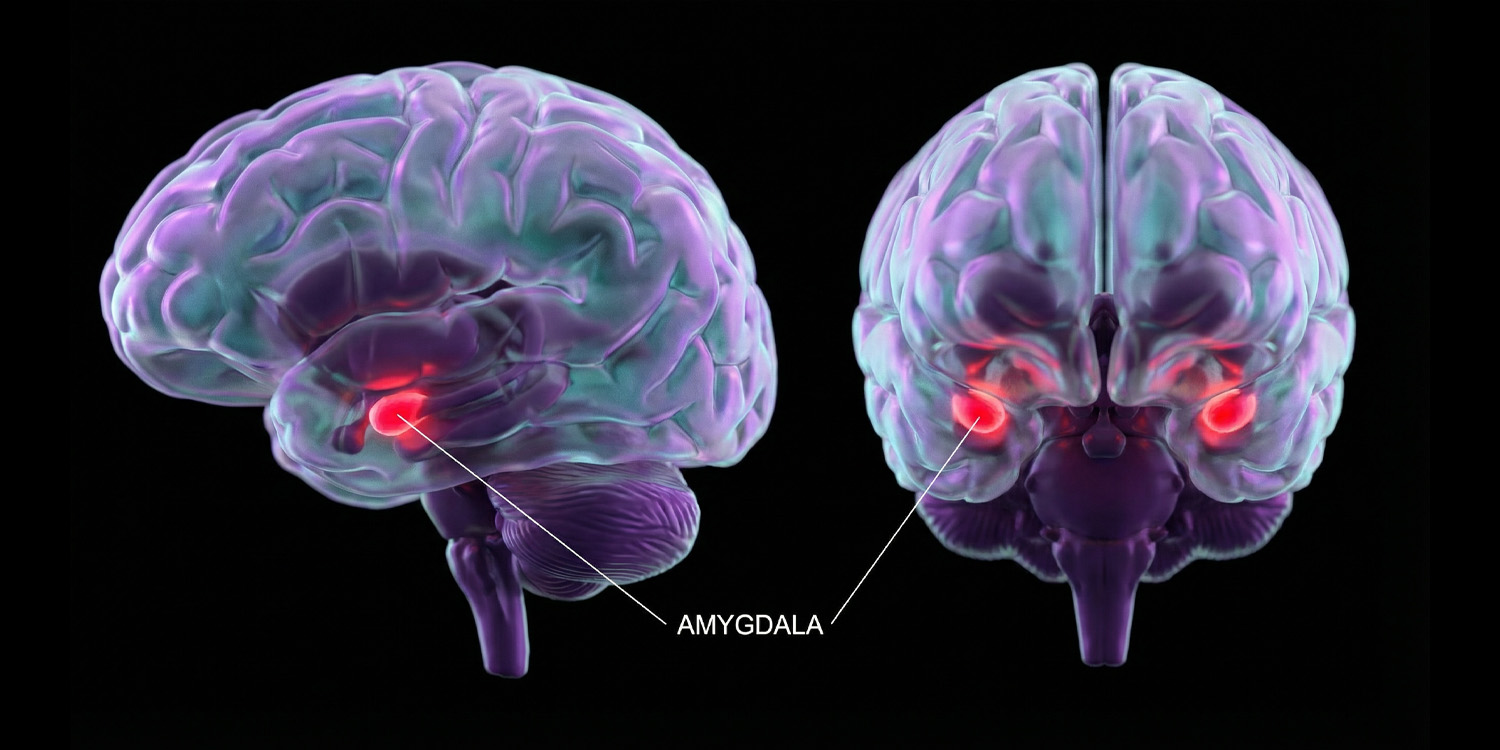
    A core skill it teaches is distancing: stepping back from an upsetting thought or image to see it differently. Before 77 patients began 25 sessions of therapy, the researchers scanned their brains while they practised distancing and modelled how brain regions influenced one another. In patients who later improved, frontal regions involved in control influenced each other more strongly. In those who did not, the amygdala, a region involved in emotion, had more influence on the frontal regions. These patterns predicted the outcome better than chance, though only modestly, and added little to what ordinary clinical measures already showed. The authors say the result needs repeating.

    Golde et al., Psychological Medicine, 9 November 2026. doi:10.1017/s0033291726106138

    Read the paper: Altered effective connectivity during cognitive distancing in cognitive behavioral therapy nonresponders with depression

Friday 13 November

Thursday 12 November