STEM Synapse

Subjects

Biology & Ecology

Today

  1. Paper of the Day

    Groundfish With Diverse Life Histories Increase in Size and Abundance With Proximity to Spatial Protections

    Closing patches of sea to fishing should let fish grow bigger and more numerous inside them and spill over into nearby waters, but that is hard to show in real data.

    Why it matters Fish protected from fishing off western Canada grow larger and more plentiful, and the gains reach nearby waters and build the longer protection lasts.

    The researchers used 18 years of surveys of 28 kinds of bottom-dwelling fish, collected by four Indigenous Nations on the Pacific coast of Canada, inside and up to 160 kilometres outside seven Rockfish Conservation Areas. Fish were largest and most abundant inside the protected areas and became bigger and more common closer to them, and these effects strengthened as the areas aged. Fast-breeding species increased in number sooner, as expected, but slow-breeding species grew larger sooner, the opposite of the prediction.

    Wilson et al., Ecology Letters, 17 November 2026. doi:10.1111/ele.70486
    Read the paper: Groundfish With Diverse Life Histories Increase in Size and Abundance With Proximity to Spatial Protections

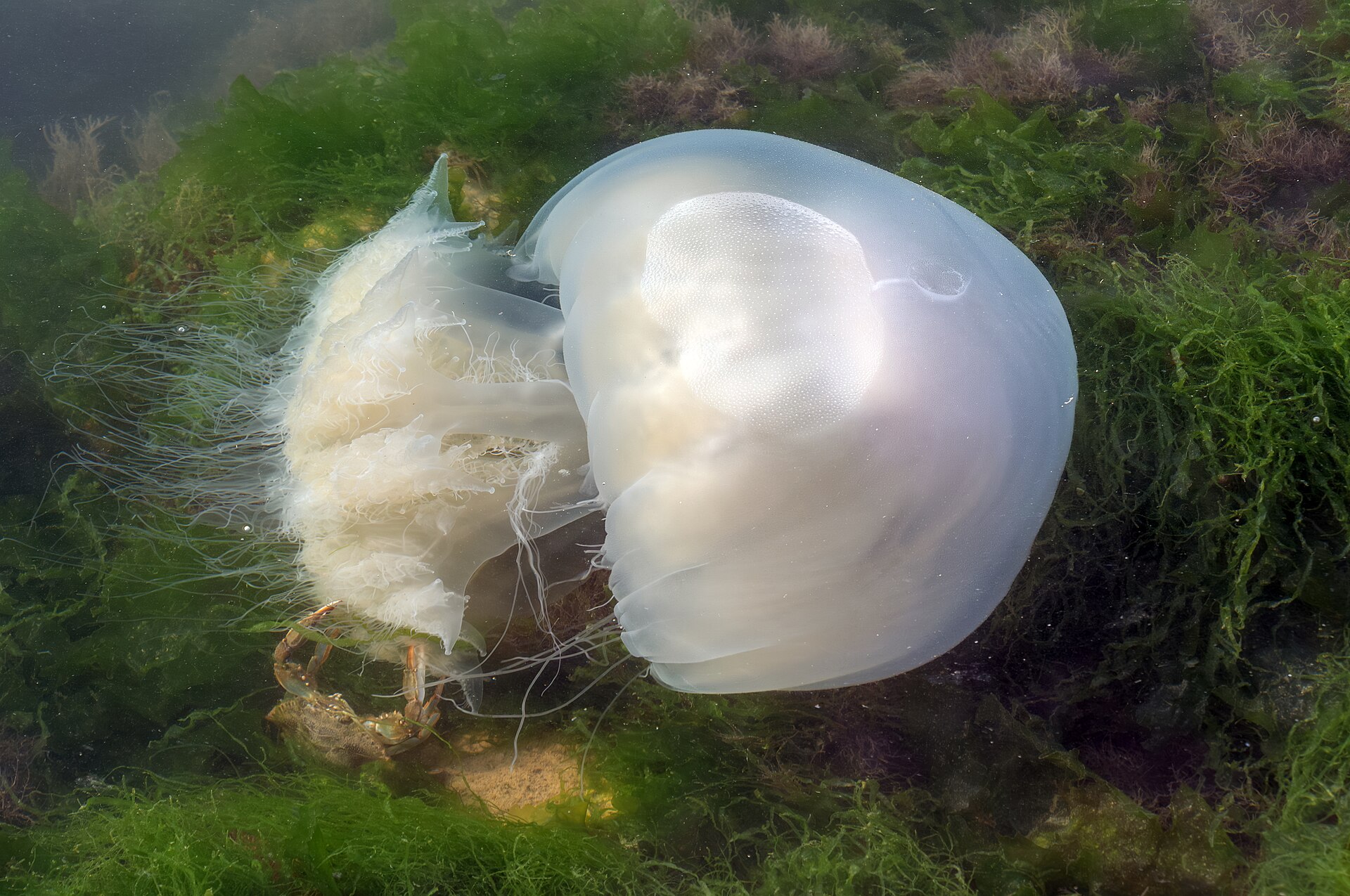
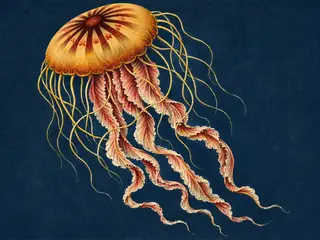
  2. A nomad jellyfish with a blue crab attacking it in the Radès el Mallaha canal.
    Nomad jellyfish attacked by a blue crab in the Radès el Mallaha canal Smailtn, CC BY. Added .

Tuesday 17 November

  1. Paper of the Day

    Conserved Upper Thermal Limits and Small Safety Margins in Soil Copiotrophic Bacteria

    How microbes will cope with rising temperatures is one of the open questions in climate models, and soil bacteria are a large part of it.

    Why it matters Many fast-growing soil bacteria share an upper heat limit near 40 degrees Celsius, and those in hot, variable climates have little room left to warm.

    The researchers grew 251 isolates of fast-growing soil bacteria from 18 genera, collected from topsoils across California, at a range of temperatures. Their best growing temperature and their upper heat limit were set mainly by evolutionary lineage, with little link to the local climate, and variation in these limits narrowed above 40 degrees Celsius. Bacteria from hot places with swinging temperatures had little margin to spare. The authors suggest many of these bacteria may already be poorly matched to local heat, and that their ability to adapt to warming may be limited.

    Favier et al., Ecology Letters, 16 November 2026. doi:10.1111/ele.70483

    Read the paper: Conserved Upper Thermal Limits and Small Safety Margins in Soil Copiotrophic Bacteria

Monday 16 November

  1. Paper of the DayPreprint, not yet peer reviewed

    Parental effects can be transmitted through the rhizosphere microbiome

    Plants can pass on the effects of what they lived through, such as crowding by neighbours, to their offspring.

    Why it matters In a common reed, parents that faced competition had offspring with different root microbes, which may account for part of how the offspring grew.

    Known routes include chemical marks on DNA; whether the microbes around the roots are another route was not known. The researchers grew eight genetic lines of common reed with or without a competing species, then raised their offspring in identical conditions. Offspring of parents that had faced competition grew in a more cautious, resource-saving way. They also had different communities of bacteria and fungi around their roots, and statistical modelling suggested these microbes may explain part of the change in the offspring. Parental experience may therefore shape the next generation through soil life as well as directly.

    Chen et al., bioRxiv ecology, 14 November 2026. doi:10.64898/2026.11.12.766069

    Read the paper: Parental effects can be transmitted through the rhizosphere microbiome

Sunday 15 November

  1. Paper of the Day

    Graphical Approach of the Interplay of Eco‐Evolutionary Dynamics and Coexistence

    Species evolve while they compete, and that evolution can change whether they are able to go on living side by side.

    Why it matters One diagram can now show whether evolution helps or harms the ability of species to live side by side, and the evolving species often ends up more vulnerable.

    The two processes have been hard to view together. The authors propose a way to draw both on one diagram. Coexistence is shown as angles: one for how much room the whole community has to coexist, and one per species for how well it resists being pushed out. An evolutionary change then appears as an arrow across the same picture, so its effect on coexistence can be read off. Using it, the authors show when evolution helps coexistence and when it harms it, and find that evolution often leaves even the evolving species more vulnerable.

    Loeuille et al., Ecology Letters, 14 November 2026. doi:10.1111/ele.70470

    Read the paper: Graphical Approach of the Interplay of Eco‐Evolutionary Dynamics and Coexistence

Saturday 14 November

  1. Paper of the Day

    Children with developmental language disorder show selective impairments in low-frequency neural tracking of speech

    Speech has rhythm: slow rises and falls that mark phrasing and stress, and faster beats that mark syllables.

    Why it matters Children with developmental language disorder track the slow rhythms of speech less closely in the brain, and closer tracking goes with better language.

    One theory holds that children learn language partly because their brain activity locks onto these rhythms. The researchers tested whether that differs in children with developmental language disorder, who struggle with language for no obvious reason. They recorded the brain's magnetic signals while children with and without the disorder listened to a story. In children with the disorder, brain activity followed the slowest rhythms less closely across hearing and speech areas on both sides, and followed the syllable rhythm less closely on the right. The closer a child's tracking of slow rhythms, the better their language scores.

    Keshavarzi et al., PLOS Biology, 13 November 2026. doi:10.1371/journal.pbio.3003782

    Read the paper: Children with developmental language disorder show selective impairments in low-frequency neural tracking of speech

Friday 13 November

  1. Paper of the Day

    The importance of genes does not predict their mutation rate

    Mutations are usually treated as random, striking genes without regard to how much they matter.

    Why it matters How important a gene is does not predict how often it mutates in E. coli or yeast, undercutting the idea that evolution shields its most vital genes.

    Some researchers have claimed otherwise: that evolution has arranged for important genes to mutate less and for genes needing rapid change to mutate more. Those claims have been disputed. This study reanalysed records of mutations accumulating in normal strains of the gut bacterium E. coli and of baker's yeast, taking other influences into account. In E. coli, heavily used genes may mutate slightly less, but yeast shows no such pattern. In neither species do essential genes, or genes for abundant proteins, mutate less. Where a gene sits relative to DNA copying made no difference in E. coli either.

    Radrizzani et al., PLOS Biology, 12 November 2026. doi:10.1371/journal.pbio.3004089

    Read the paper: The importance of genes does not predict their mutation rate

Thursday 12 November

  1. Paper of the Day

    Life-cycle plasticity enables conditional asexual reproduction in a kelp

    Many living things can reproduce either sexually or without a partner, but how they switch between the two is poorly understood.

    Why it matters A kelp turns to reproducing without a mate mainly when no partners are nearby, which suggests asexual reproduction is a fallback rather than a rival to sex.

    The researchers studied this in a kelp, Laminaria pallida, a large seaweed with a complex life cycle, using measurements of gene activity, growth experiments and samples from wild populations. Reproducing without a partner was linked to lower fitness. In two wild populations the ability was kept but rarely used. And when potential mates were present, the kelp developed asexually less often. The authors suggest that asexual reproduction is a fallback, letting the kelp persist when sex is not possible while keeping the long-term benefits of sex when mates are around.

    Liesner et al., PLOS Biology, 12 November 2026. doi:10.1371/journal.pbio.3004065

    Read the paper: Life-cycle plasticity enables conditional asexual reproduction in a kelp