STEM Synapse

Subjects

Chemistry & Materials Science

Today

  1. Paper of the Day

    Sulfurization Breaking the Ferroelectric Polarization Bottleneck in PbTiO3

    Ferroelectric materials hold an electric polarisation that can be flipped and kept without power, which makes them useful for memory chips.

    Why it matters Treating lead titanate films with sulfur nearly doubles the stored electric polarisation that ferroelectric memory relies on.

    Lead titanate should be one of the strongest, but electric current leaking through it has kept that strength from showing in practice. The researchers made thin films of it with a cheap solution-based method and then treated them with sulfur. Untreated films already performed well, and sulfur treatment raised the polarisation they kept to about 1.8 times its original value, while the material stayed ferroelectric at higher temperatures. Calculations suggest sulfur stretches the crystal in a way that favours the polar arrangement. The authors see the method as promising for ferroelectric devices.

    Pan et al., JACS, 17 November 2026. doi:10.1021/jacs.6c17201

    Read the paper: Sulfurization Breaking the Ferroelectric Polarization Bottleneck in PbTiO3
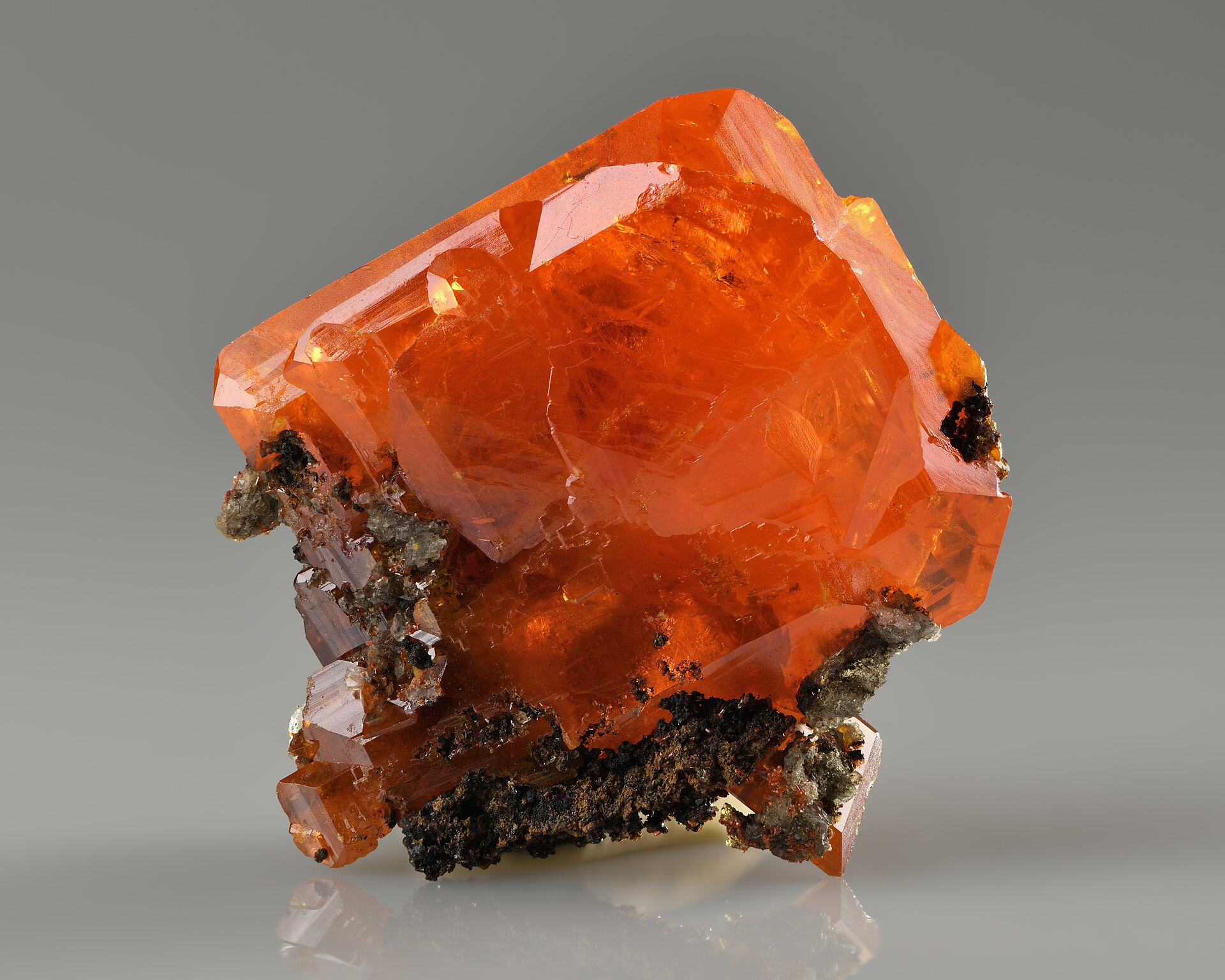
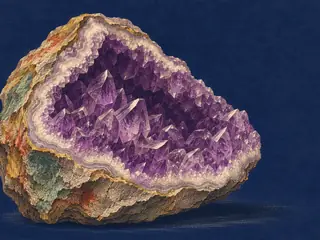
  2. Orange-red tabular wulfenite crystals on a small amount of matrix, from the Red Cloud mine in Arizona.
    Orange-red wulfenite crystals from the Red Cloud mine, Arizona Ivar Leidus, CC BY-SA. Added .

Tuesday 17 November

  1. Paper of the Day

    Self‐Sustaining Lattice‐Oxygen Cycling Enables Durable Industrial‐Level Seawater Electrolysis

    Splitting seawater with electricity could make hydrogen fuel without drawing on fresh water, but fast catalysts tend to fall apart, worn down by chloride from the salt and by gaps that open in their own structure as they give up oxygen.

    Why it matters Hydrogen can be made from natural seawater for thousands of hours with a catalyst that resists salt damage and repairs its own oxygen losses.

    The researchers made a disordered catalyst of ruthenium, iron and cobalt dotted with silver. The silver forms a surface layer that keeps chloride away and helps refill the missing oxygen. In natural seawater it ran at an industrial current for a combined total of more than 9,500 hours, and a complete electrolyser built with it also ran without a break. The authors present the approach as a general route to durable hydrogen production from seawater.

    Chen et al., Advanced Materials, 16 November 2026. doi:10.1002/adma.75651

    Read the paper: Self‐Sustaining Lattice‐Oxygen Cycling Enables Durable Industrial‐Level Seawater Electrolysis

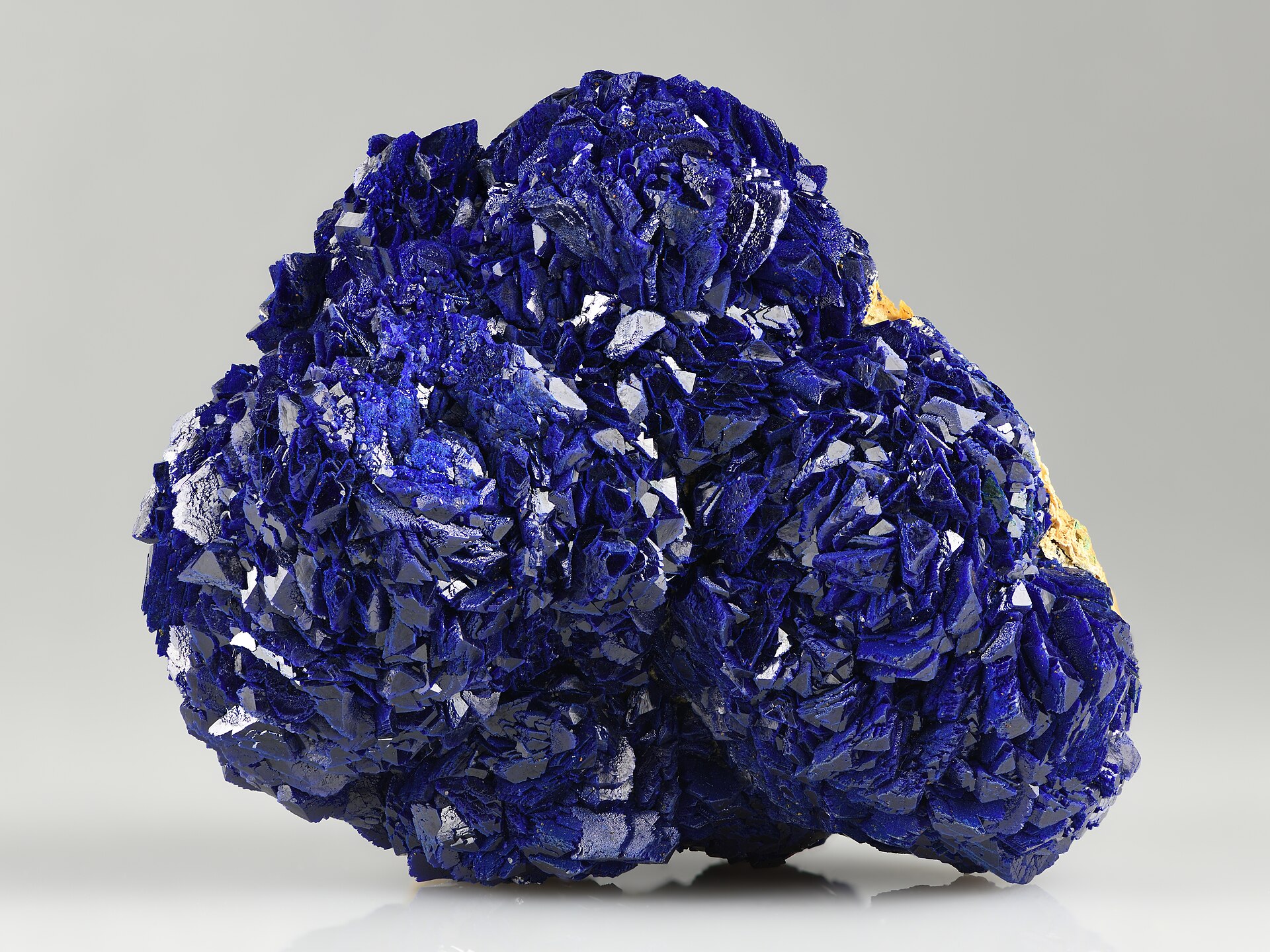
  2. Blue azurite crystals covering a rock matrix with minor malachite, from the New Nevada Lode in La Sal, Utah.
    Azurite crystals on matrix from the New Nevada Lode, La Sal, Utah, USA Ivar Leidus, CC BY-SA. Added .

Monday 16 November

  1. Paper of the Day

    Ultra‐Stable Phosphide Barrier Layer for Thermoelectric Bismuth Telluride

    Bismuth telluride is a widely used material for devices that turn a temperature difference directly into electricity, but generators built from it have been held back by the lack of a reliable barrier layer, the thin coating that keeps the material from reacting where it is joined to other parts.

    Why it matters Generators that turn heat into electricity with bismuth telluride gain a nickel phosphide barrier layer that stayed stable for 90 days at about 250 °C.

    The researchers propose a family of compounds called metal phosphides and pick out nickel phosphide. It reacts very little with bismuth telluride, nickel moves through it slowly, and it bonds strongly at the atomic scale. The joint stayed stable for 90 days at about 250 °C, the longest reported for any such barrier. A test generator built with it turned up to 6.9% of the heat into electricity.

    Chen et al., Advanced Materials, 15 November 2026. doi:10.1002/adma.75713

    Read the paper: Ultra‐Stable Phosphide Barrier Layer for Thermoelectric Bismuth Telluride

Sunday 15 November

  1. Paper of the Day

    Pulsed Electrosynthesis of Conformal High‐Entropy Metallic Glass Skins for Durable Industrial Water Electrolysis

    Splitting water with electricity makes hydrogen, but electrodes must survive harsh conditions at the high currents industry needs.

    Why it matters A thin glassy metal coating kept hydrogen-producing electrodes working for more than 1,300 hours, where crystalline versions failed within about 200.

    Metallic glasses, metals whose atoms are jumbled rather than arranged in crystals, resist corrosion well, but mixtures of several metals tend to crystallise instead. The researchers made such a glass at room temperature, in water: very short, intense pulses of current deposit the metals too quickly for crystals to form, leaving a skin about 100 nanometres thick on the electrode. Electrodes coated this way produced hydrogen at high current for more than 1,300 hours, while crystalline versions failed within about 200. In a complete water-splitting device they ran for 1,200 hours and outperformed a standard made with precious metals.

    Lin et al., Advanced Materials, 14 November 2026. doi:10.1002/adma.75714

    Read the paper: Pulsed Electrosynthesis of Conformal High‐Entropy Metallic Glass Skins for Durable Industrial Water Electrolysis

Saturday 14 November

  1. Paper of the Day

    A Unified Reactivity Scale Predicts Nonenzymatic Phosphoryl Transfer and Nucleophilic Catalysis in Water

    Living cells constantly move phosphate groups from one molecule to another; it is how they handle energy.

    Why it matters A single scale now predicts how fast phosphate groups move between molecules in water without enzymes, and hints at why enzymes so often use histidine.

    Enzymes do this today, so how did such reactions run before enzymes existed? In water, a phosphate donor may pass its phosphate to the intended partner or simply be broken down, and predicting which has been difficult. The researchers measured 11,520 reactions and, with earlier published values, built one scale that ranks 34 donors and 45 acceptors and predicts how fast any pair will react. The scale also predicts which small molecules best speed these reactions up. For donors like ATP, the best is imidazole, the reactive part of the amino acid histidine, which may explain why enzymes use histidine so often.

    Schürmann et al., JACS, 13 November 2026. doi:10.1021/jacs.6c17044

    Read the paper: A Unified Reactivity Scale Predicts Nonenzymatic Phosphoryl Transfer and Nucleophilic Catalysis in Water

Thursday 12 November

  1. Paper of the Day

    MgO Facets as Regenerable Molecular Oxygen Reservoirs in Oxidative Coupling of Methane

    Catalysts speed up chemical reactions at their surfaces, and the same material can behave differently depending on which crystal faces it shows.

    Why it matters The shape of a magnesium oxide crystal, and not only what it is made of, affects how well it turns methane into larger, more useful molecules.

    The researchers compared magnesium oxide particles with different exposed faces in a test reaction that joins methane molecules into larger ones. Eight-sided particles, which expose one particular face, consistently outperformed the conventional forms. Measurements taken during the reaction at about 800 °C, with calculations, indicate why: oxygen molecules held on that face help break methane's carbon-hydrogen bonds. The oxygen is used up as the reaction runs, but exposing the catalyst to oxygen restores it, so the cycle can be repeated. Shaping a metal oxide's surface can therefore give it an ability the ordinary form lacks.

    Kwon et al., Angewandte Chemie, 12 November 2026. doi:10.1002/anie.9539988

    Read the paper: MgO Facets as Regenerable Molecular Oxygen Reservoirs in Oxidative Coupling of Methane