STEM Synapse

Subjects

Space, Astronomy & Aerospace

Today

  1. Paper of the Day

    Bayesian Inference of Stellar r-process Abundances

    Many elements heavier than iron, including gold and uranium, are made in the rapid neutron-capture process, a burst of nuclear reactions whose exact settings in space are still debated.

    Why it matters Heavy elements in old stars and in the Sun can be traced to just two kinds of neutron-capture conditions, mixed in different proportions.

    Old stars rich in these elements keep a record of it. The researchers built a statistical method that explains a star's pattern of elements as a mix of simulated production events, each with its own conditions. For one well-studied star, exactly two components were needed, one making the heavier elements and one the lighter ones, and adding more did not help. Two other old stars and the Sun's own heavy elements fit almost the same two components in different proportions, although the Sun's lightest heavy elements need an extra source.

    Kuske et al., Astrophysical Journal, 17 November 2026. doi:10.3847/1538-4357/aea6a7

    Read the paper: Bayesian Inference of Stellar r-process Abundances
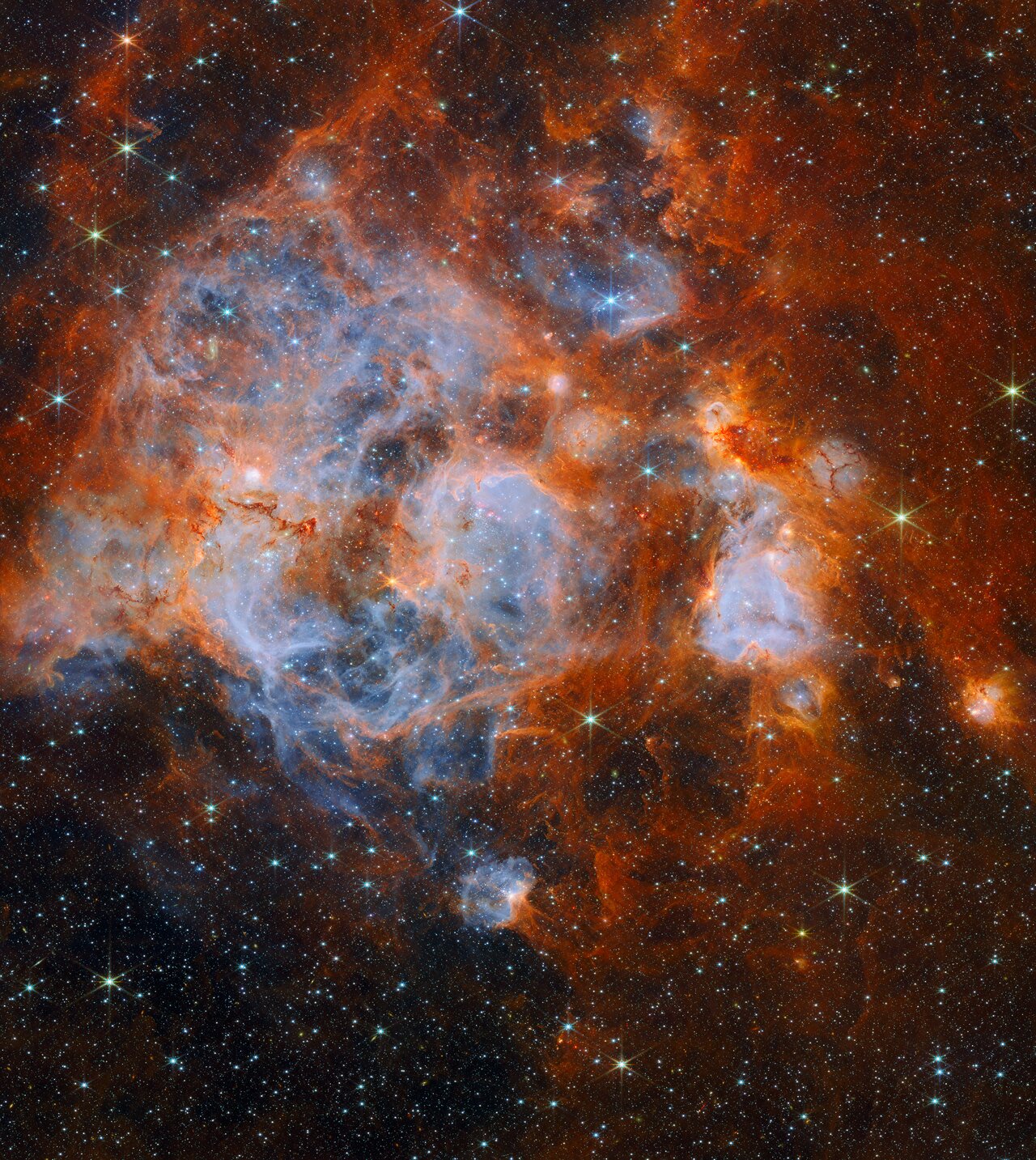
  2. James Webb Space Telescope view of N159, a star-forming region in the Large Magellanic Cloud.
    N159, a star-forming region in the Large Magellanic Cloud, seen by Webb ESA/Webb, CC BY. Added .

Tuesday 17 November

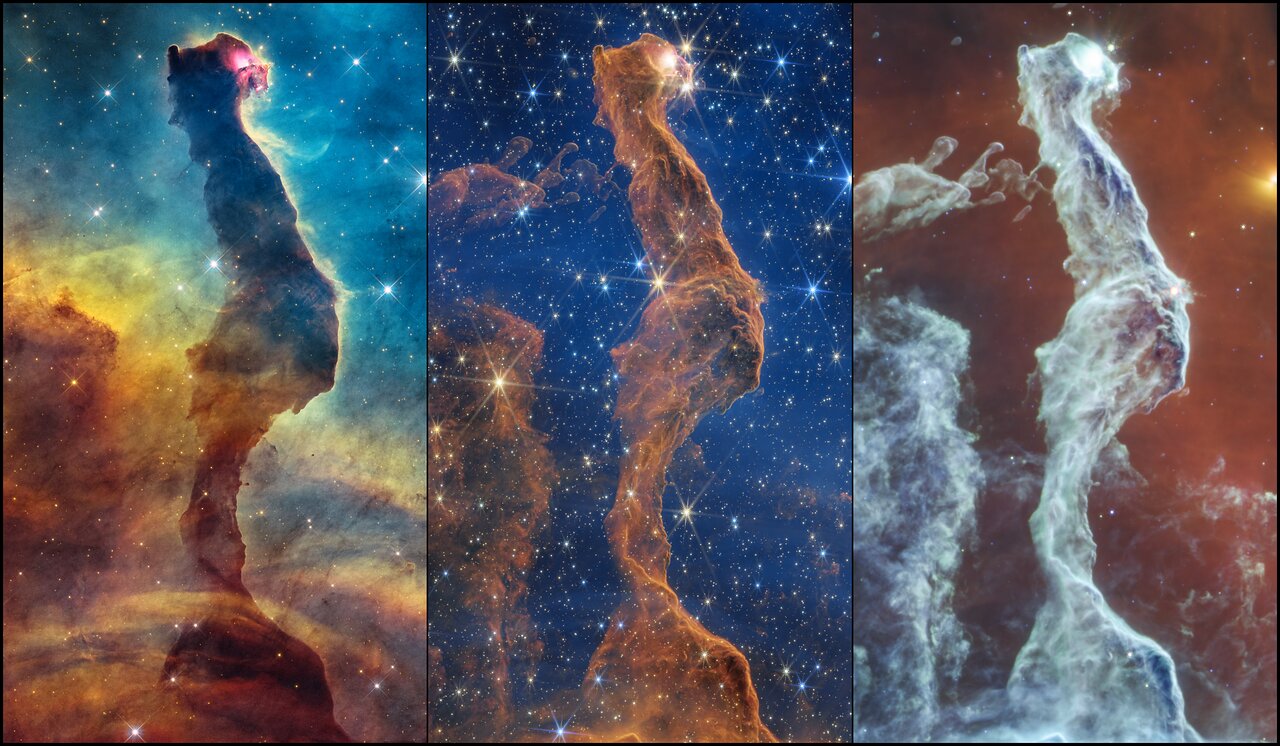
  1. Collage of Hubble and Webb images of the Cat’s Head Nebula, a dark dust pillar in the Carina Nebula where stars are forming.
    Cat’s Head Nebula seen by Hubble and Webb ESA/Webb, CC BY. Added .
  2. Paper of the Day

    Magnetic Reconnection Governs the Entire Lifecycle of Solar Eruptive Magnetic Flux Rope

    Before many solar eruptions, a twisted bundle of magnetic field called a flux rope sits in the Sun's atmosphere, and what makes it suddenly blast outward is still argued over.

    Why it matters Magnetic field lines breaking and rejoining, rather than the instability usually blamed, may be what sets off and powers eruptions on the Sun.

    The usual explanation is an instability that sets in once the rope rises past a certain height, with magnetic reconnection, the breaking and rejoining of field lines, in a supporting role. Using detailed three-dimensional computer simulations, the researchers grew a flux rope and watched it rise past that height without erupting. It erupted only once the current layer beneath it became thin enough for reconnection to begin, and reconnection then supplied most of the push. The authors conclude that, in this model, reconnection builds, triggers and drives the eruption.

    Bian et al., Astrophysical Journal, 16 November 2026. doi:10.3847/1538-4357/aeb375

    Read the paper: Magnetic Reconnection Governs the Entire Lifecycle of Solar Eruptive Magnetic Flux Rope

Monday 16 November

  1. Paper of the DayPreprint, not yet peer reviewed

    Effects of Lensing by Sgr A* on Semicoherent Searches for Continuous Gravitational Waves. I. Signal Model and Mismatch Studies

    Spinning neutron stars are expected to give off faint, steady gravitational waves, and astronomers search for them toward the centre of the Milky Way.

    Why it matters The Milky Way's central black hole would distort gravitational waves from neutron stars behind it in ways current searches leave out of their models.

    For a star behind the giant black hole there, gravity would bend the waves along two paths, and the two copies would overlap and interfere. As the star moves, the interference shifts in ways the search templates leave out. The authors added simulated signals, with and without this effect, to noise and ran a standard search on them. Magnification helped detection, fast sideways motion took some of the gain away, and faint signals were affected more than strong ones. Limits from such searches therefore cannot simply be rescaled; the full distorted signal has to be simulated.

    Sharma et al., arXiv astro-ph, 12 November 2026.

    Read the paper: Effects of Lensing by Sgr A* on Semicoherent Searches for Continuous Gravitational Waves. I. Signal Model and Mismatch Studies

  2. Webb view of protostars and outflows near the star cluster IC 348, including HH 797 and the propeller-shaped HH 211.
    Herbig-Haro objects HH 797 and HH 211 near the star cluster IC 348 ESA/Webb, CC BY. Added .
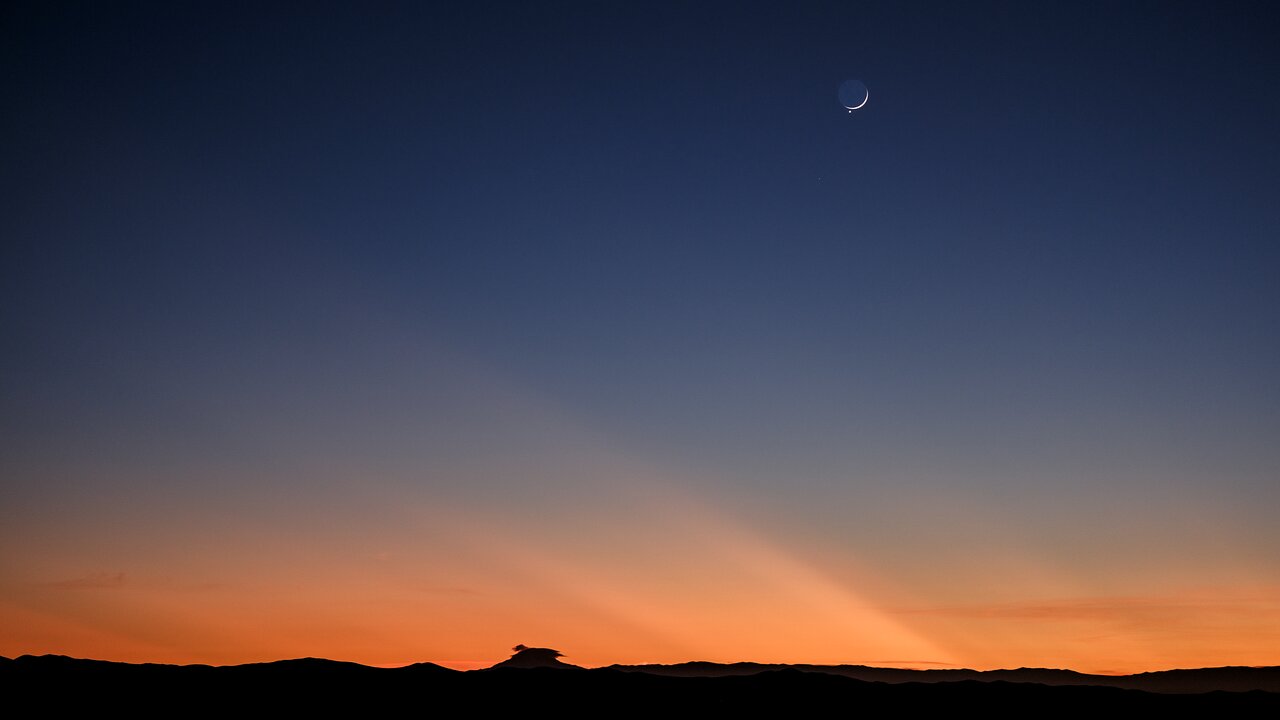
  3. A thin crescent Moon with Venus just below it rises over the Andes at dawn, seen from Paranal Observatory in Chile.
    A thin Moon and Venus rising over the Andes at dawn ESO, CC BY. Added .

Sunday 15 November

  1. Paper of the DayPreprint, not yet peer reviewed

    The full Gaia colour-magnitude diagram with white dwarfs reveals a declining Milky Way star formation history

    White dwarfs are the dense, slowly cooling remnants of stars like the Sun, and because they cool predictably they record when stars formed.

    Why it matters Star formation near the Sun peaked early and has declined since, according to a model that fits ordinary stars and white dwarfs, the remnants of dead stars.

    They are usually modelled separately from ordinary stars. The authors built one model of the Milky Way's stars that must explain both at once, and tuned it against nearly eight million stars within about 3,300 light-years measured by the Gaia telescope, 110,000 of them white dwarfs. It reproduces the count of each kind of star within 3%, where an earlier model tuned only on ordinary stars predicted 81% too many white dwarfs. In the history it recovers, star formation peaks early and declines steadily, with two later bursts about 2.4 billion and 0.5 billion years ago.

    Sysoliatina et al., arXiv astro-ph, 12 November 2026.

    Read the paper: The full Gaia colour-magnitude diagram with white dwarfs reveals a declining Milky Way star formation history

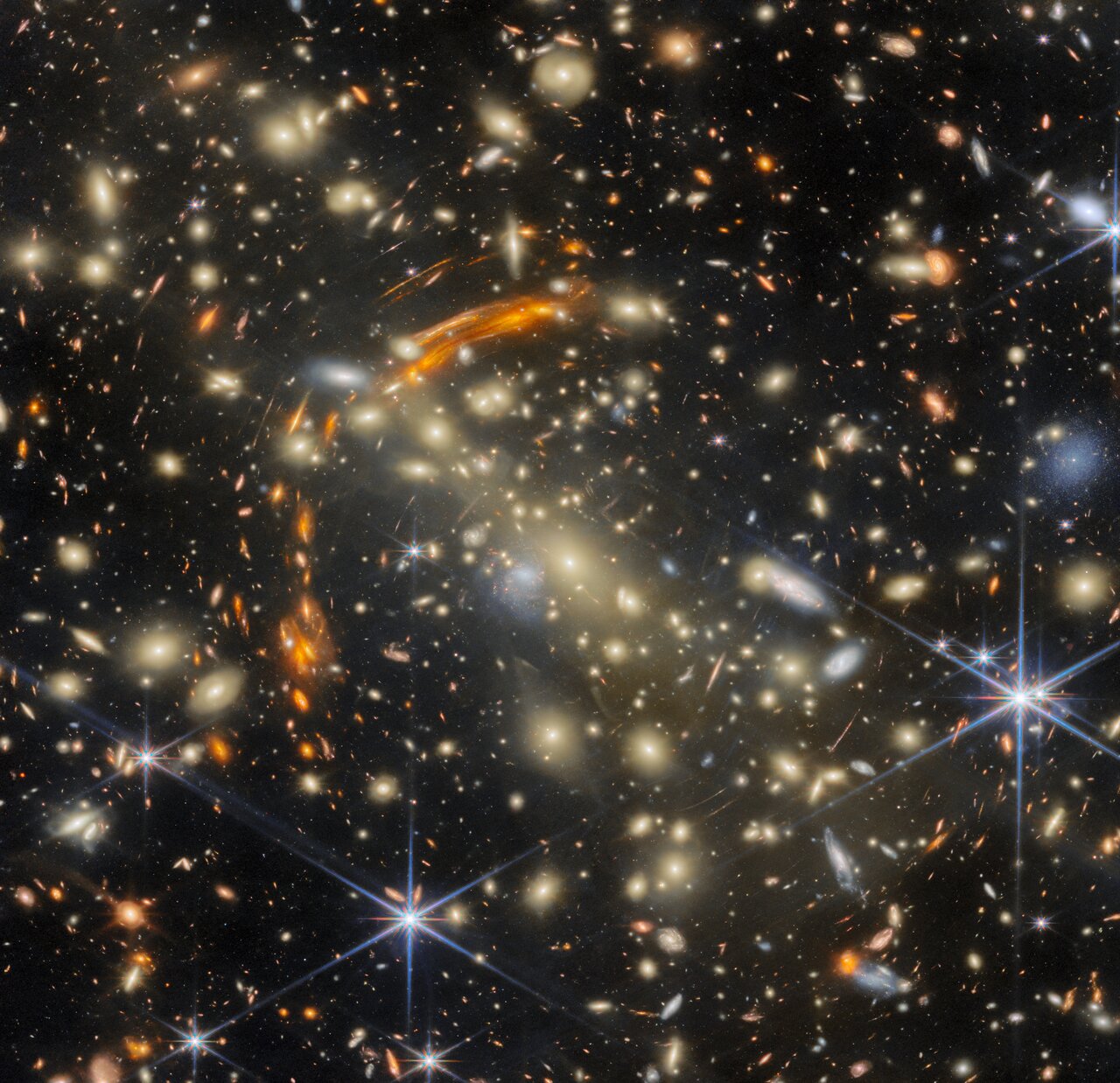
  2. Webb Space Telescope view of galaxies in the cluster MACS J0454.1-0300, with golden galaxies warped and multiplied.
    Galaxies in a cosmic house of mirrors ESA/Webb, CC BY. Added .

Saturday 14 November

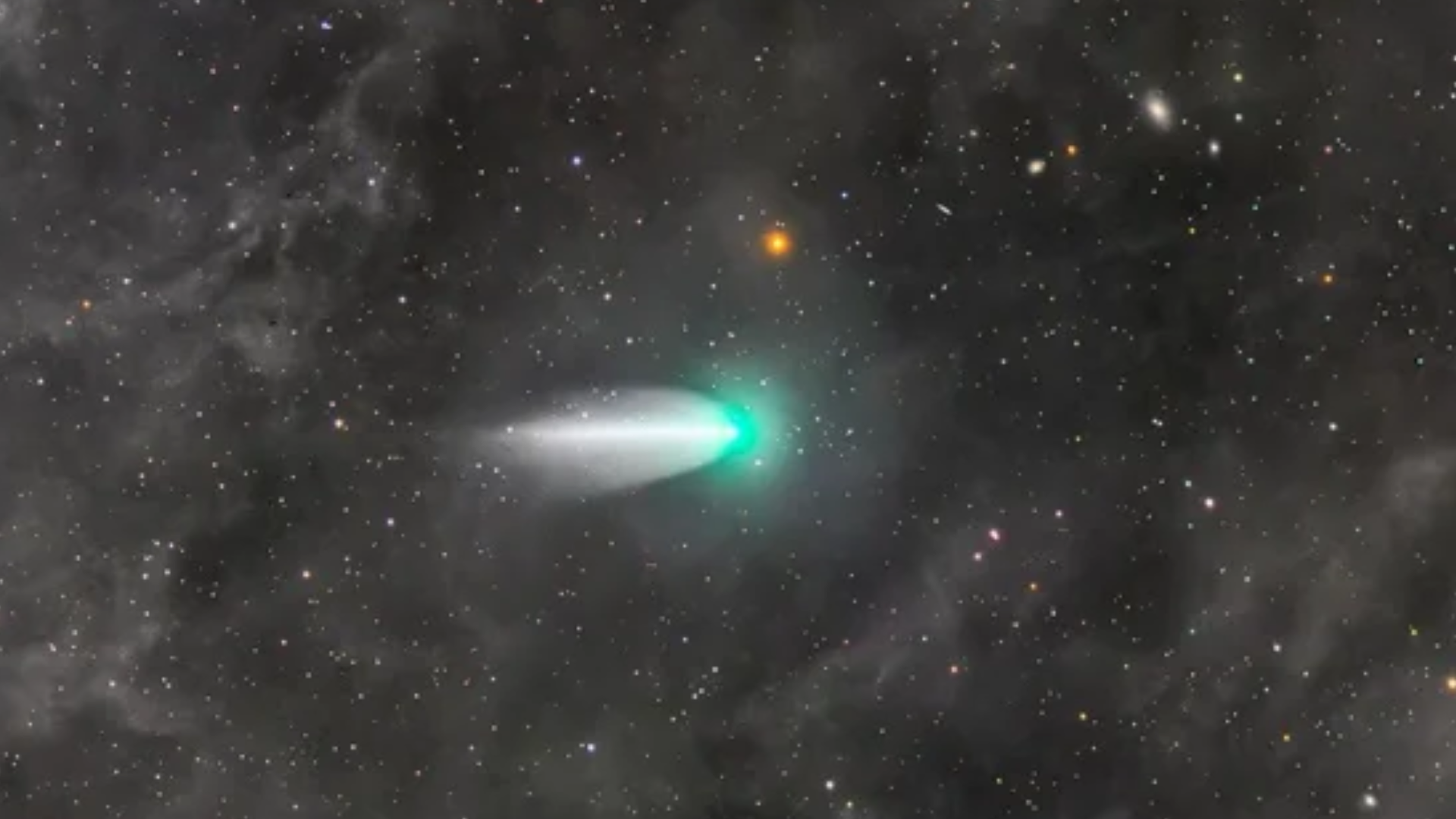
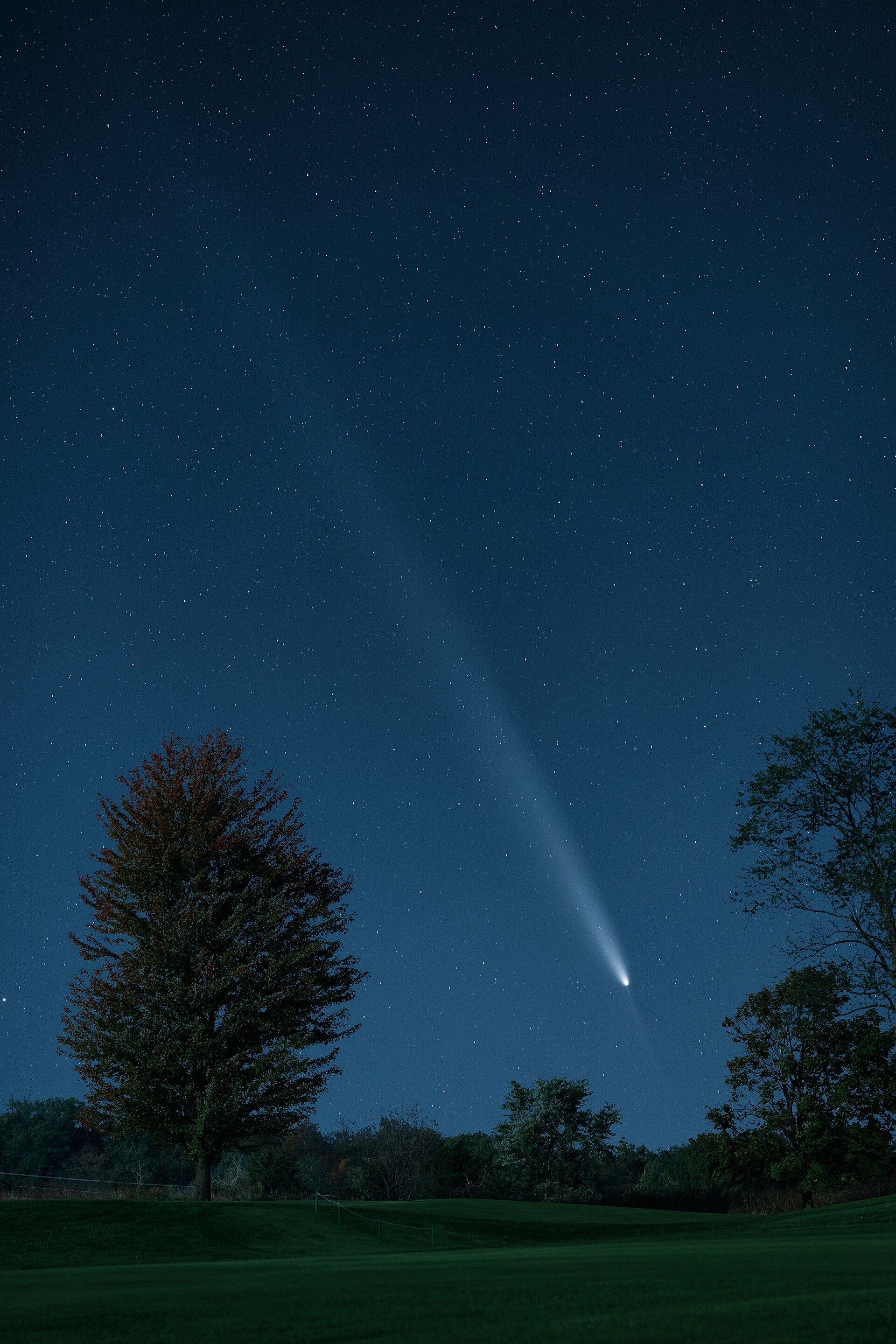
  1. Comet Tsuchinshan–ATLAS in the sky over Ohio after sunset, shown in a composite image.
    Comet Tsuchinshan–ATLAS over Ohio Jim Vajda, CC BY. Added .

Friday 13 November

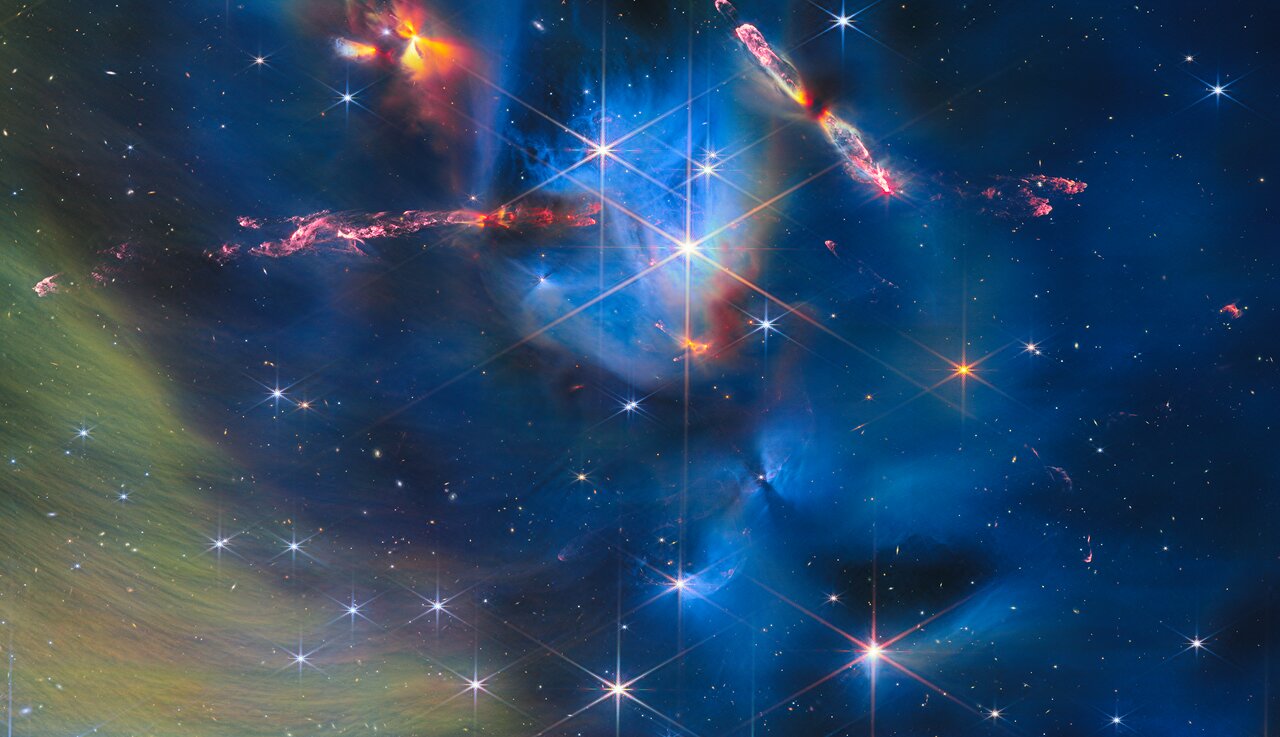
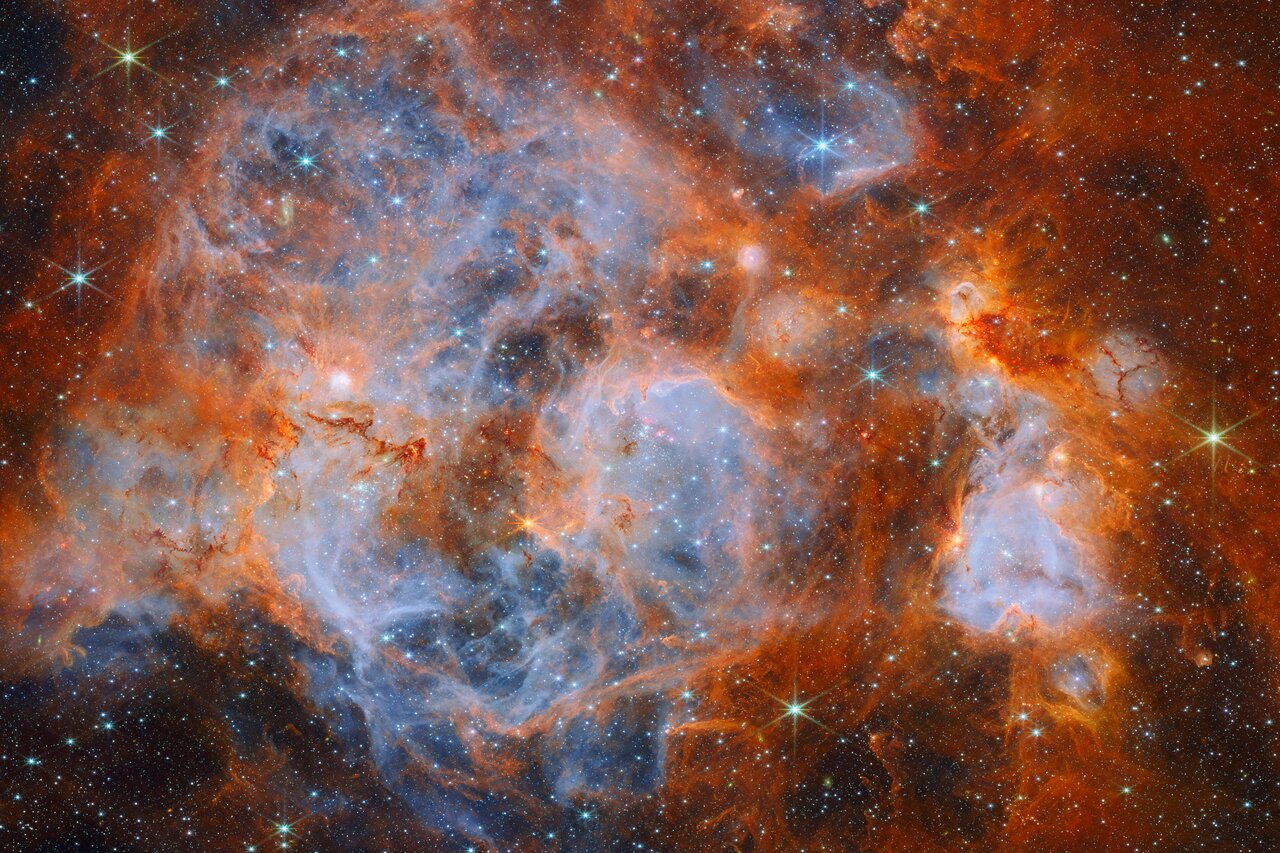
  1. Webb view of N159, a star-forming region of dense gas clumps in the Large Magellanic Cloud, about 230 light years across.
    Stars brewing in a nebulous cauldron ESA/Webb, CC BY. Added .
  2. Paper of the DayPreprint, not yet peer reviewed

    JWST Rocky Worlds DDT Observations of LTT 1445 A b and c in Secondary Eclipse Using MIRI/F1500W

    Do small rocky planets orbiting red dwarfs, the most common kind of star, keep their atmospheres?

    Why it matters The nearest rocky planets seen crossing a small red star look like bare rock, narrowing down where such planets lose their atmospheres.

    The James Webb Space Telescope is testing this by measuring the heat such planets give off. This study looked at two rocky planets of LTT 1445 A, the nearest system of its kind, about 22 light-years away. Both gave off as much heat as dark, bare rock would. For planet b, the data limit the surface pressure to about a tenth of Earth's or less, so it has no substantial atmosphere; planet c is less certain. Planet b sits close to the predicted dividing line between planets that keep their air and those that lose it, so the result helps fix that line.

    Ih et al., arXiv astro-ph, 12 November 2026.

    Read the paper: JWST Rocky Worlds DDT Observations of LTT 1445 A b and c in Secondary Eclipse Using MIRI/F1500W

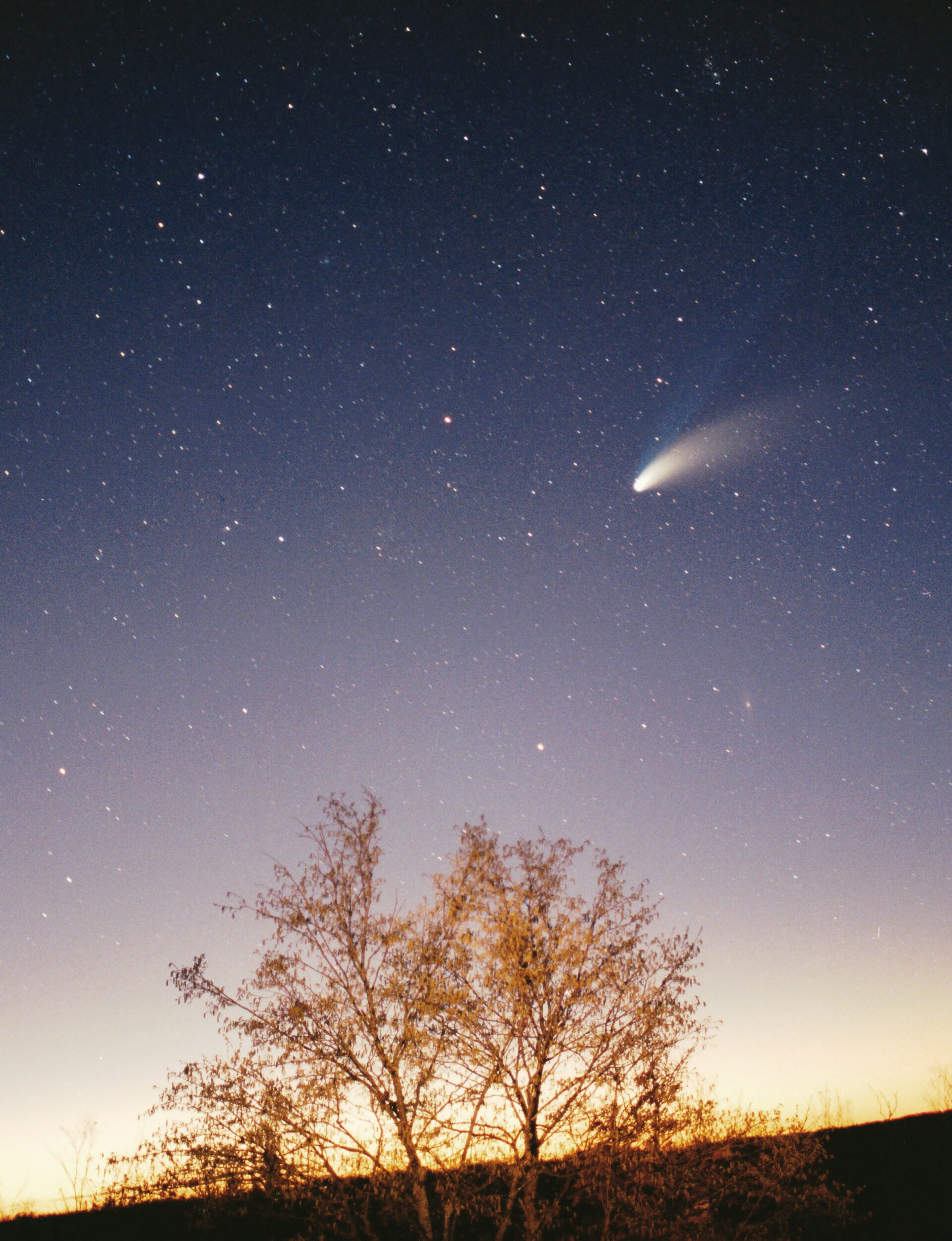
  3. Comet Hale-Bopp above a tree near Pazin in Istria, Croatia, with the Andromeda Galaxy faintly visible to the lower right of the comet.
    Comet Hale-Bopp above a tree in Istria, Croatia Philipp Salzgeber, CC BY-SA. Added .

Thursday 12 November

  1. Paper of the Day

    Foiling Black Hole Foils: Revealing Horizon Alternatives with Baryonic Atmospheres

    A black hole has an event horizon, a boundary nothing can return from.

    Why it matters Proposed stand-ins for black holes that have a surface should glow as matter falls onto them, so a missing glow counts against many such models.

    That boundary is hard to square with quantum physics, so theorists have proposed look-alikes with a surface instead. Could astronomers tell the difference? The authors worked out what happens to gas falling steadily onto such an object. In typical cases the gas should build into a dense atmosphere that shines, with a brightness set mainly by how fast gas falls in and only weakly by the object underneath. So where matter falls onto a black hole candidate and no such glow is seen, broad classes of these look-alikes are constrained or ruled out, provided gravity outside behaves as Einstein's theory says.

    Faraji et al., Astrophysical Journal, 12 November 2026. doi:10.3847/1538-4357/aea90b

    Read the paper: Foiling Black Hole Foils: Revealing Horizon Alternatives with Baryonic Atmospheres