

STEM Synapse

Latest in STEM

Tuesday 17 November

  1. Paper of the DayAI & Machine LearningPreprint, not yet peer reviewed

    PhysDox: Benchmarking LLMs on Physical Feasibility Auditing of Physiological Sensing Protocols

    Language models are increasingly asked to help design experiments, and they write plans that read well, yet a fluent plan can still be physically impossible to carry out.

    Why it matters Language models that help plan lab work often miss the physical reasons a written experiment cannot succeed, especially limits nobody states outright.

    The researchers built a test of 683 expert-checked plans for measuring signals from the human body, each graded as sound, slightly flawed or fatally flawed, and asked six models to judge them. The best reached a score of only 53 out of 100 at spotting the problems. The models tended to mistake a plan that lists every step for one that would work, and they missed unstated physical limits about twice as often as plain hardware errors. The authors conclude that checking feasibility takes real physical reasoning rather than recall.

    Liu et al., arXiv cs.AI, 16 November 2026.

    Read the paper: PhysDox: Benchmarking LLMs on Physical Feasibility Auditing of Physiological Sensing Protocols

  2. Paper of the DayChemistry & Materials Science

    Self‐Sustaining Lattice‐Oxygen Cycling Enables Durable Industrial‐Level Seawater Electrolysis

    Splitting seawater with electricity could make hydrogen fuel without drawing on fresh water, but fast catalysts tend to fall apart, worn down by chloride from the salt and by gaps that open in their own structure as they give up oxygen.

    Why it matters Hydrogen can be made from natural seawater for thousands of hours with a catalyst that resists salt damage and repairs its own oxygen losses.

    The researchers made a disordered catalyst of ruthenium, iron and cobalt dotted with silver. The silver forms a surface layer that keeps chloride away and helps refill the missing oxygen. In natural seawater it ran at an industrial current for a combined total of more than 9,500 hours, and a complete electrolyser built with it also ran without a break. The authors present the approach as a general route to durable hydrogen production from seawater.

    Chen et al., Advanced Materials, 16 November 2026. doi:10.1002/adma.75651

    Read the paper: Self‐Sustaining Lattice‐Oxygen Cycling Enables Durable Industrial‐Level Seawater Electrolysis

  3. Paper of the DayPsychology & Cognitive SciencePreprint, not yet peer reviewed

    Hunger and Concentration in Daily Life: Inter-Individual Differences and Eating-Related Variation but No Robust Average Association

    Does being hungry make it harder to concentrate?

    Why it matters Feeling hungry did not, on average, make people less able to concentrate in daily life, though some individuals were affected far more than others.

    Hunger is a frequent bodily signal that could pull attention away from a task, but people usually eat to quiet it, which makes its everyday effect hard to pin down. Here 64 people reported their concentration, hunger and recent eating six times a day for four weeks. Across the group there was no reliable link: on average, hungrier moments were not less focused ones. The link did vary a lot from person to person, and in exploratory analyses hunger went with poorer concentration after breakfast and lunch. The authors suggest that everyday focus depends less on hunger itself than on the person and the meal context.

    Bamberg et al., PsyArXiv, 16 November 2026. doi:10.31234/osf.io/486ny_v4

    Read the paper: Hunger and Concentration in Daily Life: Inter-Individual Differences and Eating-Related Variation but No Robust Average Association

  4. Paper of the DayTech & EngineeringPreprint, not yet peer reviewed

    Design and Experimental Evaluation of a Low-Cost Immersion Cooling System

    Sinking computer hardware in oil is one way to cool crowded data centres, but rigs for studying it are usually costly.

    Why it matters Liquid cooling of data centre hardware can now be studied cheaply, with a rig anyone can rebuild to compare cooling oils and layouts.

    The researchers built an open design from parts available in India for about 380 US dollars: a heater standing in for a server sits in a glass tank of mineral oil, a pump pushes the oil through a fan-cooled radiator, and a small microcontroller logs the temperatures. At full load the oil stayed only 8 degrees Celsius above room temperature while the heater surface ran far hotter. Almost all the resistance to heat flow sat where the heater meets the slowly moving oil, so the cooling loop itself has capacity to spare. The plans, code and data are public.

    Mandal et al., arXiv eess.SY, 16 November 2026.

    Read the paper: Design and Experimental Evaluation of a Low-Cost Immersion Cooling System

  5. Paper of the DayBiology & Ecology

    Conserved Upper Thermal Limits and Small Safety Margins in Soil Copiotrophic Bacteria

    How microbes will cope with rising temperatures is one of the open questions in climate models, and soil bacteria are a large part of it.

    Why it matters Many fast-growing soil bacteria share an upper heat limit near 40 degrees Celsius, and those in hot, variable climates have little room left to warm.

    The researchers grew 251 isolates of fast-growing soil bacteria from 18 genera, collected from topsoils across California, at a range of temperatures. Their best growing temperature and their upper heat limit were set mainly by evolutionary lineage, with little link to the local climate, and variation in these limits narrowed above 40 degrees Celsius. Bacteria from hot places with swinging temperatures had little margin to spare. The authors suggest many of these bacteria may already be poorly matched to local heat, and that their ability to adapt to warming may be limited.

    Favier et al., Ecology Letters, 16 November 2026. doi:10.1111/ele.70483

    Read the paper: Conserved Upper Thermal Limits and Small Safety Margins in Soil Copiotrophic Bacteria

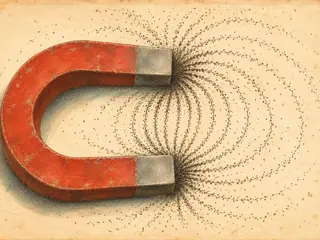
  6. Blue azurite crystals covering a rock matrix with minor malachite, from the New Nevada Lode in La Sal, Utah.
    Chemistry & Materials Science Azurite crystals on matrix from the New Nevada Lode, La Sal, Utah, USA Ivar Leidus, CC BY-SA. Added .
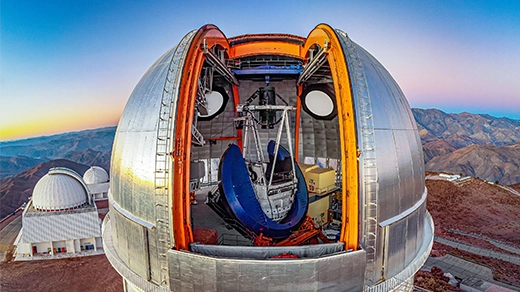
  7. Collage of Hubble and Webb images of the Cat’s Head Nebula, a dark dust pillar in the Carina Nebula where stars are forming.
    Space, Astronomy & Aerospace Cat’s Head Nebula seen by Hubble and Webb ESA/Webb, CC BY. Added .
  8. Paper of the DayMath & Computer Science FoundationsPreprint, not yet peer reviewed

    Positive Dual Certificates for Real Separated Subset Sums: Chamber Optimality of the Conway-Guy and Bohman Sets, and Exact Values up to Eight

    Pick some positive numbers so that all the sums you can make from them differ by at least 1: how small can the largest number be?

    Why it matters For sets of up to eight numbers whose sums all differ, allowing fractions does not let the largest number drop below the best whole-number answer.

    This is a version, allowing any real numbers, of a famous Erdős puzzle about whole numbers, and a construction by Conway and Guy is a well-known candidate answer. The author splits the problem into regions where it becomes a straightforward optimization and proves that the Conway-Guy set is the unique best choice within its region for every size. A computer search with exact checks then shows that for up to eight numbers, real numbers do no better than whole numbers; with eight, the largest must be 84.

    Notik, arXiv math.CO, 16 November 2026.
    Read the paper: Positive Dual Certificates for Real Separated Subset Sums: Chamber Optimality of the Conway-Guy and Bohman Sets, and Exact Values up to Eight

  9. Paper of the DaySpace, Astronomy & Aerospace

    Magnetic Reconnection Governs the Entire Lifecycle of Solar Eruptive Magnetic Flux Rope

    Before many solar eruptions, a twisted bundle of magnetic field called a flux rope sits in the Sun's atmosphere, and what makes it suddenly blast outward is still argued over.

    Why it matters Magnetic field lines breaking and rejoining, rather than the instability usually blamed, may be what sets off and powers eruptions on the Sun.

    The usual explanation is an instability that sets in once the rope rises past a certain height, with magnetic reconnection, the breaking and rejoining of field lines, in a supporting role. Using detailed three-dimensional computer simulations, the researchers grew a flux rope and watched it rise past that height without erupting. It erupted only once the current layer beneath it became thin enough for reconnection to begin, and reconnection then supplied most of the push. The authors conclude that, in this model, reconnection builds, triggers and drives the eruption.

    Bian et al., Astrophysical Journal, 16 November 2026. doi:10.3847/1538-4357/aeb375

    Read the paper: Magnetic Reconnection Governs the Entire Lifecycle of Solar Eruptive Magnetic Flux Rope

  10. Paper of the DayPhysicsPreprint, not yet peer reviewed

    Composition-dependent ultralight dark matter detection with a tetrahedral superconducting gravity gradiometer

    Some theories propose that dark matter is an extremely light field that ripples through space and tugs on different materials with slightly different strength.

    Why it matters Detectors designed to sense gravitational waves could also hunt for very light dark matter, simply by making their test masses from two different metals.

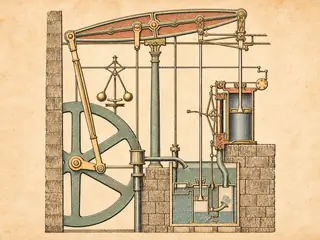
    Catching such a tug needs very sensitive instruments, and the researchers calculate that suitable ones are already being designed: superconducting gravity gradiometers, which track tiny differences in how four test masses accelerate and are planned as gravitational-wave detectors on the ground and on the Moon. Making two of the four masses from copper and two from lead would add a dark matter signal to the same readout, with no extra sensor. That signal points along a direction fixed in advance by where the metals sit, which a gravitational wave cannot mimic.

    Oh et al., arXiv astro-ph, 16 November 2026.
    Read the paper: Composition-dependent ultralight dark matter detection with a tetrahedral superconducting gravity gradiometer

  11. Paper of the DayClimate, Energy & Environment

    Seasonal Asynchrony of Microbial Biomass and Respiration Across Terrestrial Ecosystems

    Soil microbes hold carbon in their own cells and release it as they breathe, and climate models usually assume that more microbes means more breathing out.

    Why it matters Soil microbes are most plentiful and most active at different times of year, so their numbers alone are a poor guide to seasonal carbon release.

    Whether that holds through the seasons was unclear. The researchers pooled seasonal measurements from 323 studies and added detailed observations at individual sites. The times of year with the most microbial biomass were often not the times with the highest respiration. Biomass rose and fell with competition from plants, while respiration followed temperature. The authors stress that the evidence is correlational, but say models of how soils release carbon should treat the two separately as seasonal swings in climate grow.

    Luo et al., Global Change Biology, 16 November 2026. doi:10.1111/gcb.71203
    Read the paper: Seasonal Asynchrony of Microbial Biomass and Respiration Across Terrestrial Ecosystems