

STEM Synapse 中文

Latest in STEM, by subject

Friday 20 November

AI & Machine Learning

Paper of the Day

Interpretable distance-resolved graph learning for cancer gene priority screening

Finding which genes help drive cancer remains hard, because the signals pointing to them are weak and scattered across vast networks of interacting genes and proteins.

Why it matters Cancer researchers gain a shorter, checkable list of 70 genes that may drive tumours, some of them absent from existing cancer gene databases.

The researchers built CGMap, a machine learning method that reads these networks at several distances from each gene at once and shows which connections shaped each prediction, so its choices can be checked. Applied to 12,022 genes across many cancer types, it beat existing methods and put forward 70 strong candidates, some missing from established databases. In laboratory tests that switched these genes off in cancer and non-cancer cell lines, the change was linked with cells that multiplied, moved and invaded less. Those checks were made in cultured cells.

Wang et al., Nature Machine Intelligence, 16 November 2026. doi:10.1038/s42256-026-01327-4

Read the paper: Interpretable distance-resolved graph learning for cancer gene priority screening
Tech & Engineering

Paper of the Day

Bridging vision-language reasoning and learned control for legged navigation in the wild

Walking robots now cross rough ground well, but finding a way through unfamiliar places takes judgement, such as reading a warning sign or seeing which patch of ground is risky.
Why it matters Legged robots can now hike kilometres through mountains and towns with little help, by pairing learned walking skills with a model that reads the scene.

The researchers paired a vision-language model, an AI system trained on huge amounts of internet images and text, with walking and route-planning skills the robot learned in simulation. The language model labels what the camera sees and how risky each part is, and those labels become a live danger map that steers where the robot goes and steps. In real tests, the legged robot completed kilometre-long hikes in mountain and city settings with little human help. The language model's reliability and sense of space remain weak points.

Miki et al., Science Robotics, 18 November 2026. doi:10.1126/scirobotics.aee1549

Read the paper: Bridging vision-language reasoning and learned control for legged navigation in the wild

Space, Astronomy & Aerospace

Paper of the Day

Bridging Roche Lobe Overflow and Micro-tidal Disruption Events: The Runaway Evolution of Eccentric Mass Transfer in Star–Black Hole Binaries

When a star circles a black hole on a stretched, oval orbit, the black hole can strip gas from it at each close pass, but it was unclear when this stays a steady trickle and when it runs away and destroys the star.

Why it matters Stars on oval orbits around black holes may be torn apart or feed them steadily, depending on small differences in how close they pass.

The researchers simulated a Sun-like star orbiting a black hole ten times heavier, varying the orbit's shape and closest approach, over tens to more than 100 orbits. Slightly closer passes led to runaway: losing gas made the star swell until it was torn apart. Slightly wider ones settled into stable transfer lasting up to 150 orbits, the end of the simulations. The authors suggest such systems could appear as fast flashes or as repeating flares.

Chen et al., Astrophysical Journal, 19 November 2026. doi:10.3847/1538-4357/aeaf4c

Read the paper: Bridging Roche Lobe Overflow and Micro-tidal Disruption Events: The Runaway Evolution of Eccentric Mass Transfer in Star–Black Hole Binaries

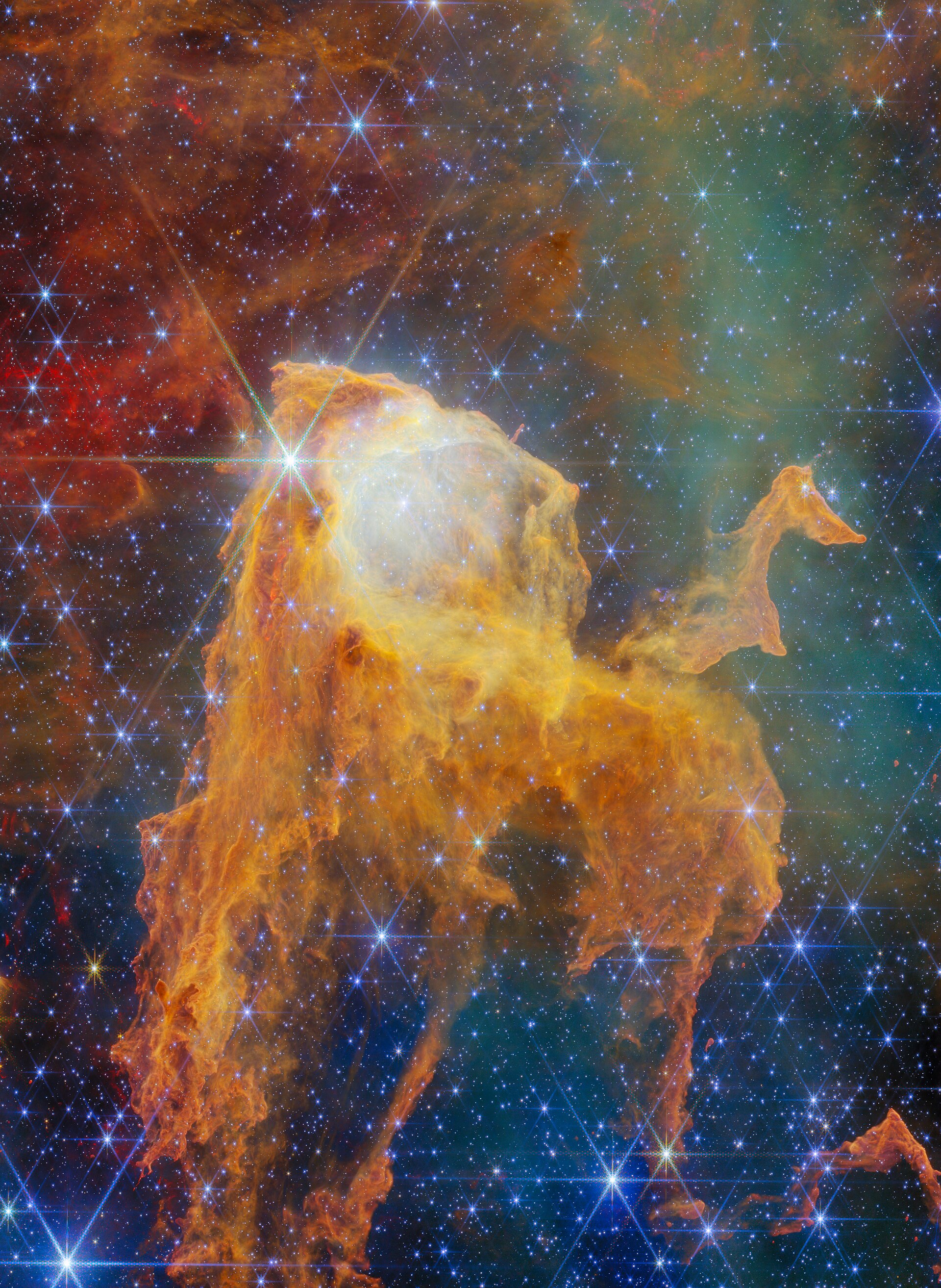
Webb infrared view of the Carina Nebula, where starlight and winds sculpt dust clouds into shapes.
Webb opens a Treasure Chest filled with stars ESA/Webb, NASA & CSA, M. Reiter, CC BY. Added .

Physics

Paper of the Day

Gamma-Ray Pulsar Discovery Using a Lattice-Based Method

Pulsars, the fast-spinning remnants of collapsed stars, can be found by the regular beat of the gamma rays they emit, but the signal is so faint that a telescope typically catches one gamma ray per hundred million turns, making searches enormously costly in computing.

Why it matters Gamma-ray pulsars can be found with hours of computing rather than centuries, which may bring many more within reach, including pulsars with a partner star.

The researchers used a different approach: instead of trying every possible spin rate, they recast the search as finding short arrows in a many-dimensional grid of points, a problem with efficient tools. On 15 years of data from the Fermi gamma-ray telescope, it found a new pulsar spinning 261 times a second in about ten hours of computer time. The previous best method had failed after about 600 years of computer time.

Pook-Kolb et al., Physical Review Letters, 19 November 2026. doi:10.1103/vlt2-xzgk

Read the paper: Gamma-Ray Pulsar Discovery Using a Lattice-Based Method

Chemistry & Materials Science

Paper of the Day

Immune and Stromal Barriers to Active Nanoparticle Targeting of Claudin-4 in Tumors

Drug-carrying nanoparticles coated with molecules that latch onto cancer cells have long been pictured as magic bullets, but rarely work as hoped in the body.

Why it matters Nanoparticles designed to seek out ovarian cancer cells are intercepted by immune and supporting cells in mice, losing the precision they show in dishes.

The researchers coated tiny iron oxide particles with binders for claudin-4, a protein on ovarian cancer cells, and tested them in cell cultures and in mice carrying tumours with and without the protein. In dishes, they picked out their targets precisely. In mice, more of them did gather in tumours carrying the protein, but immune cells in the liver and in the tumours also took them up, and cells in the tumour core stayed mostly untouched. Immune and supporting cells hinder targeting, the authors conclude, and blocking their uptake should come next.

Angarita et al., ACS Nano, 19 November 2026. doi:10.1021/acsnano.6c11570

Read the paper: Immune and Stromal Barriers to Active Nanoparticle Targeting of Claudin-4 in Tumors

Biology & Ecology

Paper of the Day

Rainforest adaptation in late Homo erectus from southern China

Homo erectus, an early human species, has long been pictured as a creature of open woodland and grassland, and its timeline in China is patchy.

Why it matters Homo erectus seems to have lived in dense rainforest in southern China until about 184,000 years ago, a habitat once credited only to Homo sapiens.

The researchers studied nine fossil teeth from two neighbouring caves in Guangxi, southern China, eight of them identified as Homo erectus. They combined 43 age measurements from five dating methods and read chemical traces in the teeth, such as isotopes, to reconstruct where they lived. The species was present there between 324,000 and 184,000 years ago, much later than the roughly 400,000 years previously established for certain fossils of the species there. The evidence suggests they lived in closed rainforest, a habitat thought to belong only to our own species.

Westaway et al., Nature, 18 November 2026. doi:10.1038/s41586-026-11155-6

Read the paper: Rainforest adaptation in late Homo erectus from southern China

Health & Biomedical

Paper of the Day

Multicenter characterization of enterocolitis associated with BCMA-directed CAR T cell therapy

A CAR T cell therapy called cilta-cel, in which a patient's own immune cells are re-engineered to attack the blood cancer multiple myeloma, can trigger a delayed and severe inflammation of the gut, but how often and how badly was unclear.

Why it matters Gut inflammation after the myeloma therapy cilta-cel affects about 3 in 100 patients and can be fatal, so doctors need to look for it early.

Doctors at eight US centres reviewed suspected cases and confirmed or judged probable 41; among 1,308 people treated, about 3% developed it. Symptoms usually began around two and a half months after the infusion, most patients had severe diarrhoea, and gut samples were packed with attacking T cells. By the last check, fewer than a third had recovered and many had died with the condition still active. The authors call for systematic evaluation and early, directed treatment.

Mikkilineni et al., Nature Medicine, 19 November 2026. doi:10.1038/s41591-026-04783-y

Read the paper: Multicenter characterization of enterocolitis associated with BCMA-directed CAR T cell therapy

Climate, Energy & Environment

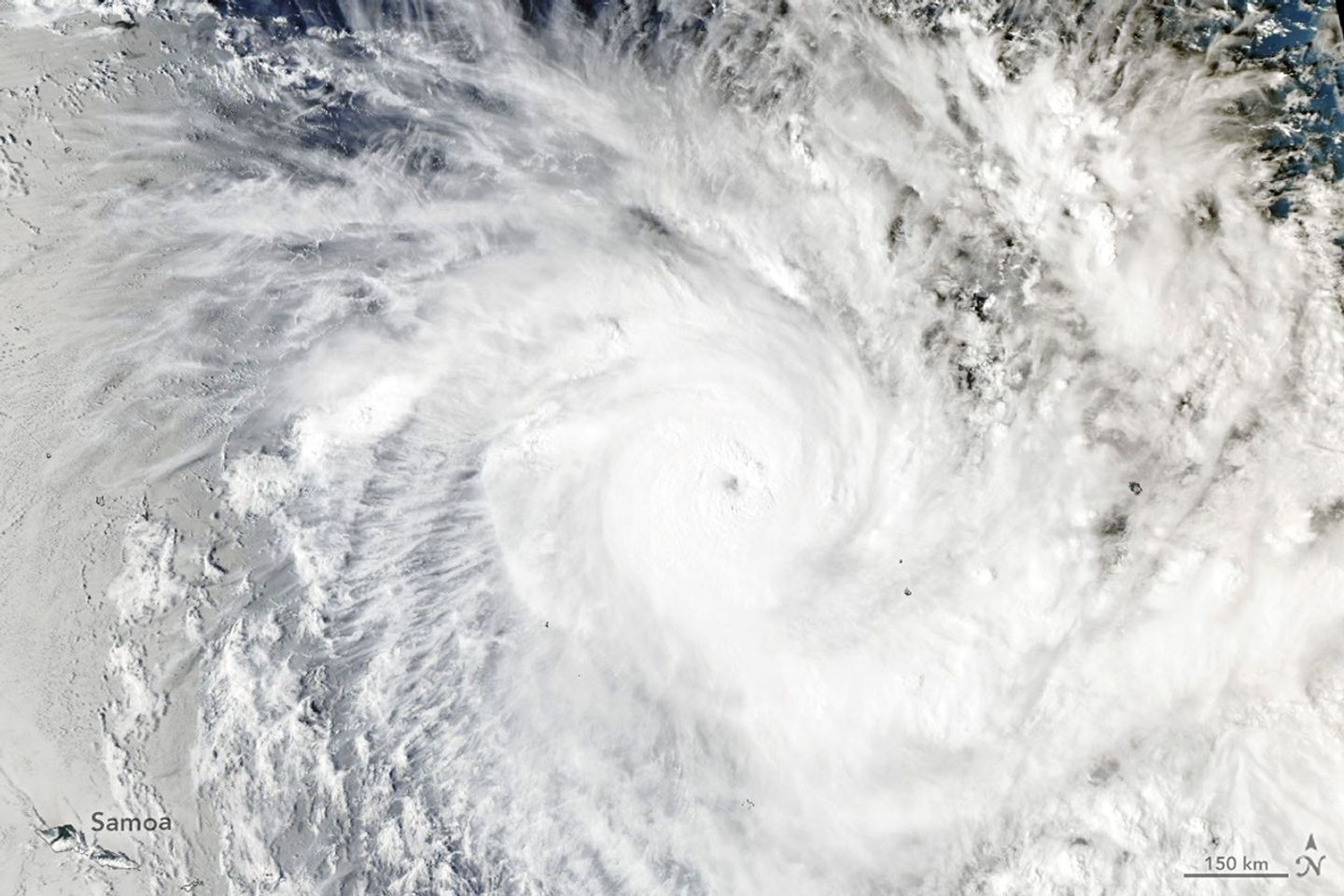
Tropical Cyclone Xavier, which launched the Southwest Pacific storm season.
The Stormy Southwest Pacific NASA Earth Observatory, Public domain. Added .

Paper of the Day

Exploring the distributional implications of targeted residential electrification in California

Switching homes from gas to electric appliances cuts emissions, but whether it saves households money is uncertain where electricity is expensive, as in California.

Why it matters California homes that already have air conditioning are far more likely to save money by replacing gas heating with electric heating.

The researchers modelled 21,609 gas-heated California homes, comparing costs, emissions and fairness under different choices of appliances, electricity price plans and rollout order. Across the scenarios, only 15% of households came out ahead financially. Homes that already had air conditioning were far better placed, especially when replacing gas heating, while few homes without it broke even. Rebates targeted by income helped lower-income households considerably. The authors conclude that cheaper installation, targeted incentives and reform of electricity pricing are central to making the switch widespread and fair in regions with costly power.

Montañés et al., Nature Energy, 19 November 2026. doi:10.1038/s41560-026-02155-x

Read the paper: Exploring the distributional implications of targeted residential electrification in California

Psychology & Cognitive Science

Paper of the Day

Causal role of human hippocampus in relational structure learning and inference

When we meet people in new settings, we work out how they relate to each other partly by reasoning from relationships we already know, and how the brain handles that knowledge is a long-standing question.

Why it matters The hippocampus, a brain region known for memory, appears to be needed for inferring new relationships from ones already known.

The researchers gave 36 volunteers a task in which they learned relationships and then had to infer new ones, and scanned their brains. The hippocampus, a region deep in the brain known for memory, held a consistent map of the relationships. Computer simulations predicted that disturbing this map should hurt inference, and in 20 volunteers, gentle ultrasound aimed at the hippocampus briefly did just that. The result points to a causal role for the hippocampus in this kind of reasoning.

Pan et al., Nature Human Behaviour, 16 November 2026. doi:10.1038/s41562-026-02627-w

Read the paper: Causal role of human hippocampus in relational structure learning and inference

Math & Computer Science Foundations

Paper of the DayPreprint, not yet peer reviewed

The Bapat-Sunder eigenvalue conjecture fails over the reals

In 1986 the mathematicians Bapat and Sunder asked whether the permanent of a matrix, a cousin of the determinant computed without minus signs, is always the largest eigenvalue of a related matrix built from it, for a well-behaved class of matrices.

Why it matters A question about matrices posed in 1986 now has a firm answer: the hoped-for property fails for real numbers as well as complex ones.

In 2018 the answer was shown to be no for matrices of complex numbers, and it was conjectured that the claim still holds for real numbers. This preprint disproves that too, with an explicit 32-by-32 matrix of whole numbers checked by exact arithmetic, and shows counterexamples exist for every size from 32 up. Together, the two results settle the old question in the negative. The failure also yields an example in quantum optics involving 32 photons.

Chalmers, arXiv quant-ph, 19 November 2026.

Read the paper: The Bapat-Sunder eigenvalue conjecture fails over the reals

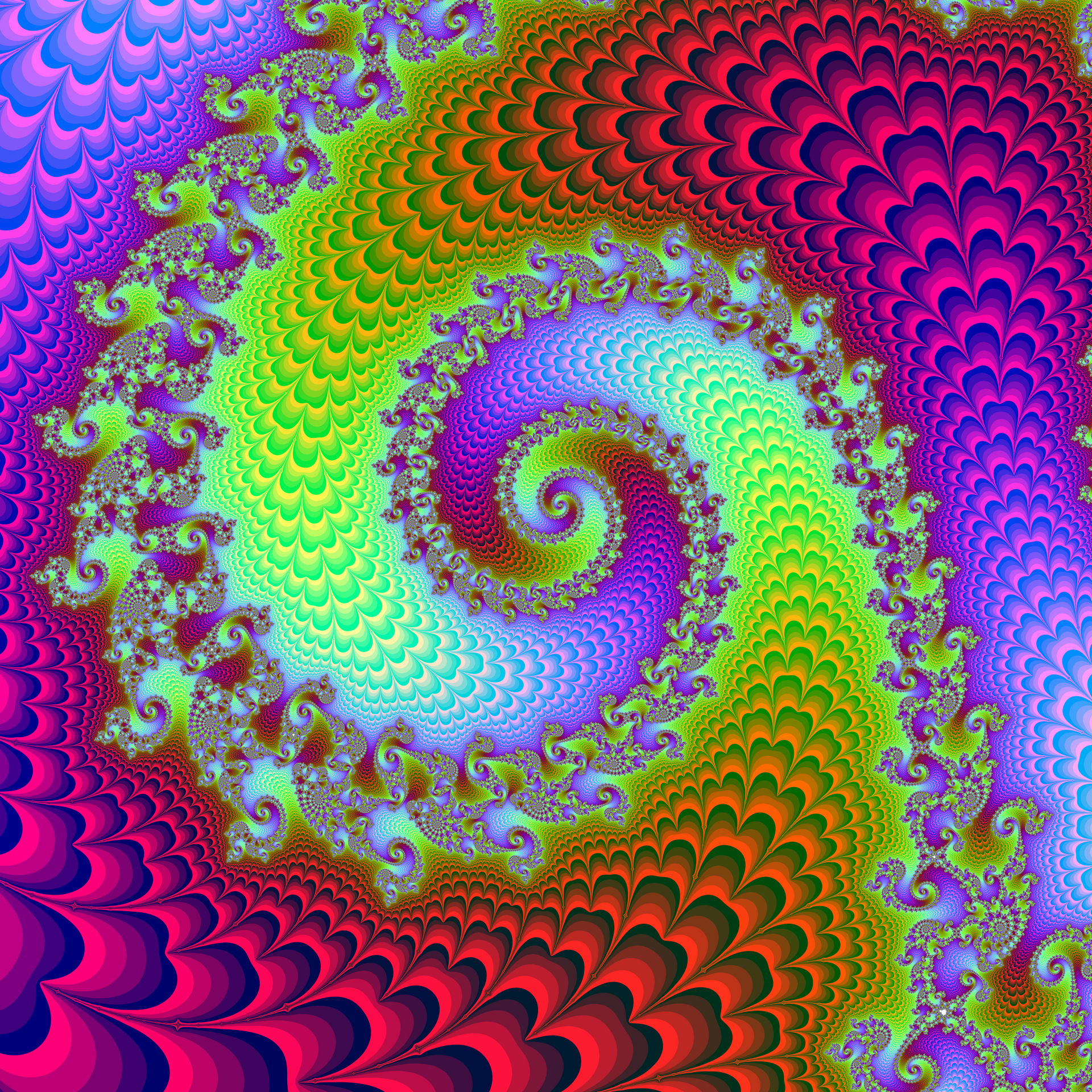
Fragment of the Mandelbrot set at coordinates -1.96680095, 0.00000478.
Fragment of the Mandelbrot set Aokoroko, CC0. Added .