STEM Synapse

Latest in STEM

Sunday 15 November

  1. Paper of the DayAI & Machine Learning

    Weisfeiler-Lehman Meets Optimal Transport: Theory, Algorithms, and Implications

    How do you measure how different two networks are?

    Why it matters Graph-based machine learning gains a measure of how different two networks are that is quick to compute and agrees with a classic test for telling them apart.

    A classic test, named after Weisfeiler and Lehman, answers only yes or no: it checks whether two networks can be told apart by repeatedly comparing each point's neighbours. This paper turns the test into a distance, a number saying how far apart two networks are, which is zero exactly when the test cannot tell them apart. The distance can be computed efficiently and picks up finer differences than a leading existing method. From it the authors design a type of neural network that can, in principle, learn any continuous function of networks. The distance also turns out to be linked to a branch of mathematics about moving probability distributions.

    Chen et al., JMLR, 14 November 2026.

    Read the paper: Weisfeiler-Lehman Meets Optimal Transport: Theory, Algorithms, and Implications

  2. Paper of the DayChemistry & Materials Science

    Pulsed Electrosynthesis of Conformal High‐Entropy Metallic Glass Skins for Durable Industrial Water Electrolysis

    Splitting water with electricity makes hydrogen, but electrodes must survive harsh conditions at the high currents industry needs.

    Why it matters A thin glassy metal coating kept hydrogen-producing electrodes working for more than 1,300 hours, where crystalline versions failed within about 200.

    Metallic glasses, metals whose atoms are jumbled rather than arranged in crystals, resist corrosion well, but mixtures of several metals tend to crystallise instead. The researchers made such a glass at room temperature, in water: very short, intense pulses of current deposit the metals too quickly for crystals to form, leaving a skin about 100 nanometres thick on the electrode. Electrodes coated this way produced hydrogen at high current for more than 1,300 hours, while crystalline versions failed within about 200. In a complete water-splitting device they ran for 1,200 hours and outperformed a standard made with precious metals.

    Lin et al., Advanced Materials, 14 November 2026. doi:10.1002/adma.75714

    Read the paper: Pulsed Electrosynthesis of Conformal High‐Entropy Metallic Glass Skins for Durable Industrial Water Electrolysis

  3. Paper of the DayPsychology & Cognitive SciencePreprint, not yet peer reviewed

    Fast Eyes, Sharp Eyes, or Good Eyes? What Links Visual Perception to Higher-Order Cognition

    People who do well on simple visual tests also tend to do well on memory and reasoning tests.

    Why it matters The link between simple visual tasks and reasoning scores appears to come from a general visual ability, not from seeing faster or more sharply.

    Why? One idea is that they take in visual information faster; another, that they see more clearly through visual clutter; a third, that they have a better visual system in general. The researchers gave 79 people versions of the same tests that limited either viewing time or clarity, plus four memory and reasoning tests, and used a statistical model to separate the three abilities. Neither speed nor clarity was related to the thinking tests. Only a general visual ability, shared across every visual test, was strongly related to them. The result supports the third idea, which the authors call good eyes.

    Yang et al., PsyArXiv, 14 November 2026. doi:10.31234/osf.io/wu9er_v1

    Read the paper: Fast Eyes, Sharp Eyes, or Good Eyes? What Links Visual Perception to Higher-Order Cognition

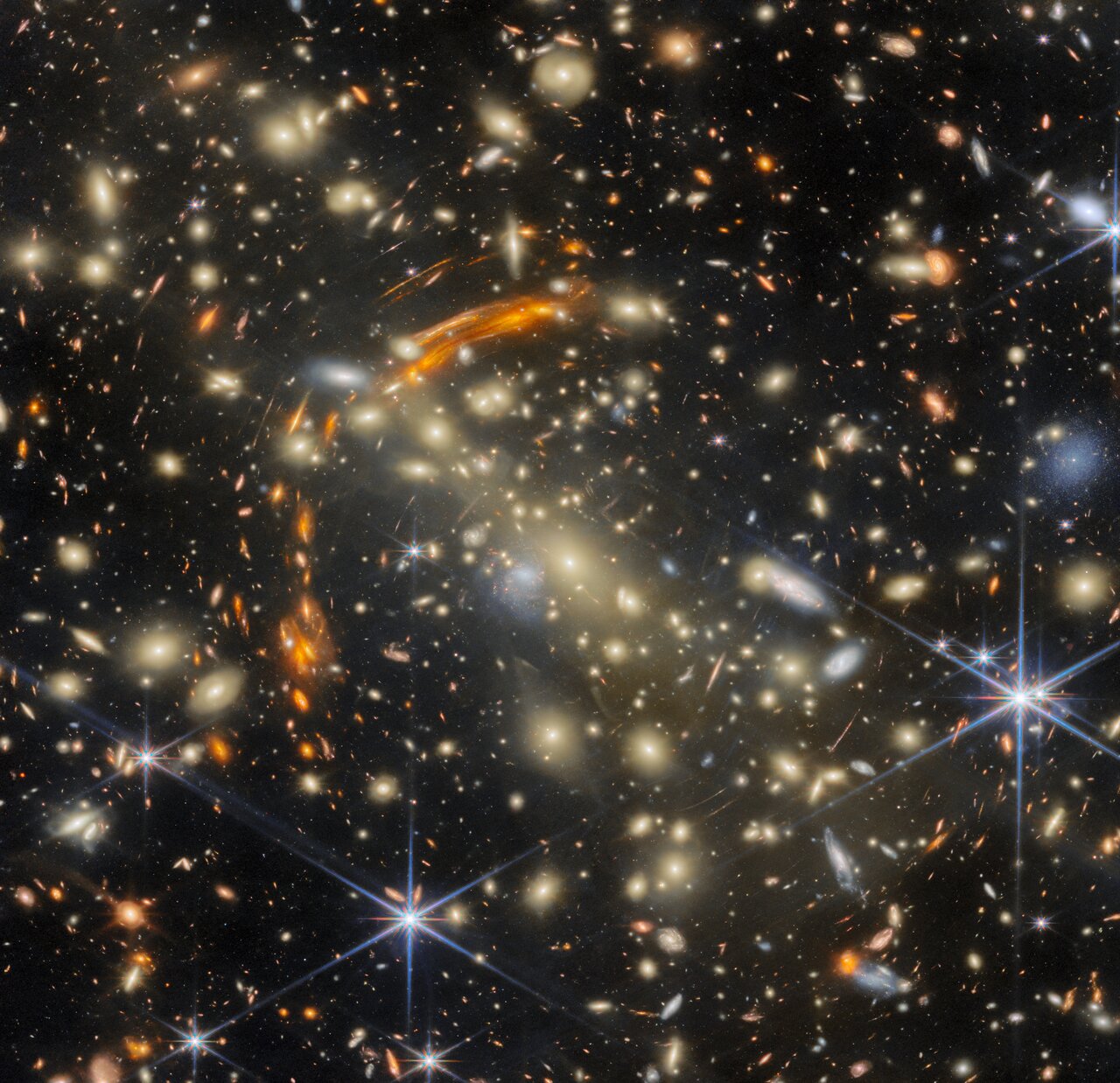
  4. Webb Space Telescope view of galaxies in the cluster MACS J0454.1-0300, with golden galaxies warped and multiplied.
    Space, Astronomy & Aerospace Galaxies in a cosmic house of mirrors ESA/Webb, CC BY. Added .
  5. Paper of the DayTech & EngineeringPreprint, not yet peer reviewed

    Reconfiguring System-Level Protection Through Bounded Delegation in RISC-V MCUs

    The small chips inside embedded devices wall off parts of their memory so that one piece of software cannot tamper with another.

    Why it matters Small embedded chips could change their memory protection rules while running, with limits on who may grant what, without slowing ordinary memory access.

    Increasingly those walls need to move while the device is running. Existing chips can limit who may change the rules, but not what rules they may then write, so a permitted program can overreach. The authors propose a scheme in which each piece of software owns a region and can only make or hand on rules inside it, with every change checked before it takes effect. Built into an open-source chip design, it did not slow ordinary memory access, and switching rules during an update was 89.5% faster than routing the change through a supervising software layer.

    Cunha et al., arXiv cs.AR, 9 November 2026.

    Read the paper: Reconfiguring System-Level Protection Through Bounded Delegation in RISC-V MCUs

  6. Paper of the DayBiology & Ecology

    Graphical Approach of the Interplay of Eco‐Evolutionary Dynamics and Coexistence

    Species evolve while they compete, and that evolution can change whether they are able to go on living side by side.

    Why it matters One diagram can now show whether evolution helps or harms the ability of species to live side by side, and the evolving species often ends up more vulnerable.

    The two processes have been hard to view together. The authors propose a way to draw both on one diagram. Coexistence is shown as angles: one for how much room the whole community has to coexist, and one per species for how well it resists being pushed out. An evolutionary change then appears as an arrow across the same picture, so its effect on coexistence can be read off. Using it, the authors show when evolution helps coexistence and when it harms it, and find that evolution often leaves even the evolving species more vulnerable.

    Loeuille et al., Ecology Letters, 14 November 2026. doi:10.1111/ele.70470

    Read the paper: Graphical Approach of the Interplay of Eco‐Evolutionary Dynamics and Coexistence

  7. Paper of the DayMath & Computer Science FoundationsPreprint, not yet peer reviewed

    Integer Programming with Polyhedral Constraints on the Image

    Integer programming is the problem of finding the best whole-number solution under a set of constraints, and it underlies scheduling, packing and many other planning tasks.

    Why it matters A wider family of optimisation problems with whole-number answers can now be solved as fast as the standard kind, which also settles an open question.

    This paper extends it to cases where the combined resources a solution uses must themselves satisfy further constraints. The authors give an algorithm, using random choices, whose running time matches the best known for ordinary integer programming, and improves on an earlier method for a more general setting. It yields exact algorithms for versions of the knapsack problem with extra conditions on what is used. It also resolves an open problem about a classic question: whether copies of given numbers can be added up to reach a target.

    Dhar et al., arXiv cs.DS, 12 November 2026.

    Read the paper: Integer Programming with Polyhedral Constraints on the Image

  8. Paper of the DaySpace, Astronomy & AerospacePreprint, not yet peer reviewed

    The full Gaia colour-magnitude diagram with white dwarfs reveals a declining Milky Way star formation history

    White dwarfs are the dense, slowly cooling remnants of stars like the Sun, and because they cool predictably they record when stars formed.

    Why it matters Star formation near the Sun peaked early and has declined since, according to a model that fits ordinary stars and white dwarfs, the remnants of dead stars.

    They are usually modelled separately from ordinary stars. The authors built one model of the Milky Way's stars that must explain both at once, and tuned it against nearly eight million stars within about 3,300 light-years measured by the Gaia telescope, 110,000 of them white dwarfs. It reproduces the count of each kind of star within 3%, where an earlier model tuned only on ordinary stars predicted 81% too many white dwarfs. In the history it recovers, star formation peaks early and declines steadily, with two later bursts about 2.4 billion and 0.5 billion years ago.

    Sysoliatina et al., arXiv astro-ph, 12 November 2026.

    Read the paper: The full Gaia colour-magnitude diagram with white dwarfs reveals a declining Milky Way star formation history

  9. Paper of the DayHealth & BiomedicalPreprint, not yet peer reviewed

    Sex and generation shape the genetic architecture of smoking initiation

    Whether a person starts smoking is influenced partly by their genes, and attitudes to smoking have changed enormously over the past century.

    Why it matters How strongly genes influence whether someone starts smoking differs between the sexes and between generations, so the effect of genes depends on social context.

    Did the genetic influence change too? Using data from nearly seven million people of European, East Asian, African American and Latino ancestry, the authors compared the genetics of starting to smoke in women and men and in older and younger generations. Genes explained more of the differences between people among women than among men, and more in younger generations than in older ones; ancestry made no such difference. The patterns also tracked anti-smoking policies and changing social norms. The authors conclude that the social setting shapes how genes influence behaviour.

    Jeong et al., medRxiv, 13 November 2026. doi:10.64898/2026.11.11.26367842

    Read the paper: Sex and generation shape the genetic architecture of smoking initiation

  10. Paper of the DayPhysicsPreprint, not yet peer reviewed

    Bound States of Two D0-Branes and the Three-Graviton Coupling

    M-theory is a proposed framework for uniting gravity with quantum physics, and one conjecture says it can be captured by something far simpler: the quantum mechanics of a set of matrices.

    Why it matters A quantum model built from matrices, proposed as a description of gravity, passes a precise test by reproducing how three particles of gravity interact.

    Testing that conjecture means solving the matrix model, which is hard. The authors solved its simplest case numerically, finding the lowest-energy state, which the conjecture identifies with a graviton, the hypothetical particle of gravity. Far from its centre, the shape of that state encodes how strongly three gravitons interact, a number already calculated another way. The numerical solution reproduces that number with high accuracy. The authors also show why: a symmetry of the model, supersymmetry, protects the value from corrections, which lets them derive it directly.

    Sanjurjo et al., arXiv hep-th, 12 November 2026.

    Read the paper: Bound States of Two D0-Branes and the Three-Graviton Coupling

  11. Paper of the DayClimate, Energy & Environment

    Belowground Productivity in Grasslands and Savannas Depends on Shifting Fire and Herbivory Regimes

    In grasslands and savannas most plant growth happens out of sight, in roots, yet little was known about how fire and grazing animals affect it in different climates.

    Why it matters Fire and grazing increase underground plant growth in grasslands and savannas, especially in wetter places, which affects how much carbon they store.

    The researchers measured root growth at seven long-running experiments in Africa and North America, from dry to fairly wet, where plots had been burned often, burned sometimes or protected from fire, and at six sites either open to large grazing animals or fenced off. Root growth was greater where water was more plentiful. Fire and grazing increased it, most of all at the wetter sites, where they held back trees and shrubs and favoured grasses. Drier sites changed little. The authors say these effects matter for how much carbon such landscapes store.

    Currier et al., Global Change Biology, 13 November 2026. doi:10.1111/gcb.71202

    Read the paper: Belowground Productivity in Grasslands and Savannas Depends on Shifting Fire and Herbivory Regimes