

STEM Synapse

Latest in STEM

Saturday 14 November

  1. Paper of the DayAI & Machine Learning

    Multimodal cell foundation models require synergistic integration beyond alignment

    Biologists have AI models trained on single kinds of cell data, such as microscope images of tissue or readouts of which genes are active.

    Why it matters Combining tissue images with gene activity data helps only when the pair reveals what neither shows alone, and common methods often miss exactly that.

    Datasets pairing both kinds are scarce, so a common shortcut joins two ready-made models. Does the pair reveal anything the stronger model did not know? The authors introduce a score for the information that appears only when the two kinds of data are considered together. They show that the usual way of joining models mostly picks up what the two already share and misses what only the pair reveals. Across ten joining methods, a single model was enough for simple tasks, while defining complex cell neighbourhoods gained from methods built for the extra information.

    Richter et al., Nature Machine Intelligence, 9 November 2026. doi:10.1038/s42256-026-01328-3

    Read the paper: Multimodal cell foundation models require synergistic integration beyond alignment


  2. Paper of the DayChemistry & Materials Science

    A Unified Reactivity Scale Predicts Nonenzymatic Phosphoryl Transfer and Nucleophilic Catalysis in Water

    Living cells constantly move phosphate groups from one molecule to another; it is how they handle energy.

    Why it matters A single scale now predicts how fast phosphate groups move between molecules in water without enzymes, and hints at why enzymes so often use histidine.

    Enzymes do this today, so how did such reactions run before enzymes existed? In water, a phosphate donor may pass its phosphate to the intended partner or simply be broken down, and predicting which has been difficult. The researchers measured 11,520 reactions and, with earlier published values, built one scale that ranks 34 donors and 45 acceptors and predicts how fast any pair will react. The scale also predicts which small molecules best speed these reactions up. For donors like ATP, the best is imidazole, the reactive part of the amino acid histidine, which may explain why enzymes use histidine so often.

    Schürmann et al., JACS, 13 November 2026. doi:10.1021/jacs.6c17044

    Read the paper: A Unified Reactivity Scale Predicts Nonenzymatic Phosphoryl Transfer and Nucleophilic Catalysis in Water

  3. Paper of the DayPsychology & Cognitive Science

    Prolonged exposure, eye movement desensitization and reprocessing therapy, and cognitive restructuring versus waiting-list for individuals with PTSD and psychosis (RE.PROCESS): A multicenter, four-arm, assessor-masked, superiority randomized controlled trial

    Therapies that work through traumatic memories are standard for post-traumatic stress disorder, but evidence has been thin for people who also have a psychotic disorder such as schizophrenia.

    Why it matters Three established trauma therapies each eased PTSD in people who also live with psychosis, in the first randomized trial to test them against a waiting list.

    This trial assigned 162 such patients at random to a waiting list or to one of three therapies, alongside usual care: prolonged exposure, in which the person revisits the memory; EMDR, which pairs recalling it with guided eye movements; and cognitive restructuring, which works on the beliefs around it. Each ran for up to 16 sessions, and symptom raters did not know who had received what. Six months on, all three had reduced PTSD symptoms substantially compared with waiting. Symptoms of psychosis did not change. The authors call for larger trials.

    Burger et al., Psychological Medicine, 9 November 2026. doi:10.1017/s0033291726106291

    Read the paper: Prolonged exposure, eye movement desensitization and reprocessing therapy, and cognitive restructuring versus waiting-list for individuals with PTSD and psychosis (RE.PROCESS): A multicenter, four-arm, assessor-masked, superiority randomized controlled trial

  4. Paper of the DayTech & EngineeringPreprint, not yet peer reviewed

    U.S. Data Center Growth Through 2030: A Critical Review of Grid Adequacy and Transmission Expansion Planning

    Can the US electricity system keep up with the data centers planned through 2030?

    Why it matters Whether the US grid can supply the data centers planned through 2030 cannot be read from national capacity totals; local limits and timing decide.

    This review of public forecasts and studies argues that the headline numbers cannot answer the question. Forecasts mix three different things: average demand over a year, peak demand, and the size of connection a site requests. And a national total of generating capacity does not show a dependable surplus, because what can be delivered depends on plant availability, regional supply, transmission bottlenecks and project timing. Data centers also behave unusually: a fault on the grid can make many switch to backup power at once and return later. The review finds that this behaviour is rarely built into the studies used to plan new power lines.

    Porkar et al., arXiv eess.SY, 13 November 2026.

    Read the paper: U.S. Data Center Growth Through 2030: A Critical Review of Grid Adequacy and Transmission Expansion Planning

  5. Paper of the DayBiology & Ecology

    Children with developmental language disorder show selective impairments in low-frequency neural tracking of speech

    Speech has rhythm: slow rises and falls that mark phrasing and stress, and faster beats that mark syllables.

    Why it matters Children with developmental language disorder track the slow rhythms of speech less closely in the brain, and closer tracking goes with better language.

    One theory holds that children learn language partly because their brain activity locks onto these rhythms. The researchers tested whether that differs in children with developmental language disorder, who struggle with language for no obvious reason. They recorded the brain's magnetic signals while children with and without the disorder listened to a story. In children with the disorder, brain activity followed the slowest rhythms less closely across hearing and speech areas on both sides, and followed the syllable rhythm less closely on the right. The closer a child's tracking of slow rhythms, the better their language scores.

    Keshavarzi et al., PLOS Biology, 13 November 2026. doi:10.1371/journal.pbio.3003782

    Read the paper: Children with developmental language disorder show selective impairments in low-frequency neural tracking of speech

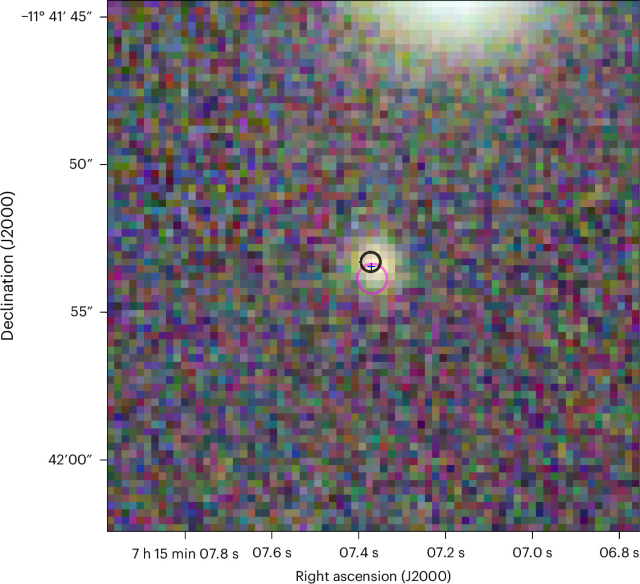
  6. Comet Tsuchinshan–ATLAS in the sky over Ohio after sunset, shown in a composite image.
    Space, Astronomy & Aerospace Comet Tsuchinshan–ATLAS over Ohio Jim Vajda, CC BY. Added .
  7. Paper of the DayPsychology & Cognitive Science

    Altered effective connectivity during cognitive distancing in cognitive behavioral therapy nonresponders with depression

    Cognitive behavioural therapy helps only about half of people with major depression.

    Why it matters Brain scans taken before therapy differed in people with depression who later did not benefit from CBT, though the scans predicted the outcome only modestly.

    A core skill it teaches is distancing: stepping back from an upsetting thought or image to see it differently. Before 77 patients began 25 sessions of therapy, the researchers scanned their brains while they practised distancing and modelled how brain regions influenced one another. In patients who later improved, frontal regions involved in control influenced each other more strongly. In those who did not, the amygdala, a region involved in emotion, had more influence on the frontal regions. These patterns predicted the outcome better than chance, though only modestly, and added little to what ordinary clinical measures already showed. The authors say the result needs repeating.

    Golde et al., Psychological Medicine, 9 November 2026. doi:10.1017/s0033291726106138

    Read the paper: Altered effective connectivity during cognitive distancing in cognitive behavioral therapy nonresponders with depression

  8. Paper of the DayMath & Computer Science FoundationsPreprint, not yet peer reviewed

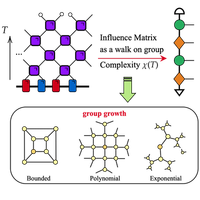
    Nonlinear lower-tail large deviations at criticality

    Draw a network by taking a set of points and joining each pair with a link at random.

    Why it matters The chance that a random network contains no triangles at all is now known across every range of density, closing the one gap left in a classic question.

    How likely is it that the result contains no triangle, three points all joined to one another? The answer has long been known when links are rare and when they are common, but not at the awkward middle density where the standard mathematical tools give no sharp answer. This paper develops general methods for such in-between cases and fills the gap. The answer changes character abruptly at one particular density, what physicists call a phase transition. For networks avoiding longer loops with an even number of links, the authors show there is no such jump.

    Kwan et al., arXiv math.PR, 13 November 2026.

    Read the paper: Nonlinear lower-tail large deviations at criticality

  9. Paper of the DayHealth & BiomedicalPreprint, not yet peer reviewed

    The contribution of Neanderthal ancestry to cancer risk

    Many people today carry a little DNA inherited from Neanderthals, and some of it affects the immune system and metabolism, both of which bear on cancer.

    Why it matters DNA inherited from Neanderthals still nudges the risk of several cancers up or down today, and carries more than its share of inherited breast cancer risk.

    Its effect on inherited cancer risk had not been examined thoroughly. This preprint went through known genetic risk signals for 17 cancers. For twelve, several Neanderthal variants were tied to risk. Closer analysis picked out 32 cases across seven cancers where the Neanderthal variant itself is probably responsible, some raising risk and some lowering it. Overall, Neanderthal DNA accounts for less of inherited cancer risk than expected, a sign that harmful variants were weeded out. Breast cancer is the exception: there it accounts for more, in both East Asian and European data.

    Brand et al., medRxiv, 13 November 2026. doi:10.64898/2026.11.10.26367742

    Read the paper: The contribution of Neanderthal ancestry to cancer risk

  10. Paper of the DayPhysicsPreprint, not yet peer reviewed

    Energy exchange confined to the perturbations: the frozen dark sector confronted with Planck, DESI, supernovae and cosmic shear

    Could dark matter and dark energy, the two unseen components that dominate the cosmos, be exchanging energy?

    Why it matters Letting dark matter and dark energy exchange energy eases one mismatch between surveys of the universe but worsens another, so the standard picture holds.

    This preprint tests a model in which they do so in a way that leaves the expansion of the universe unchanged but speeds up or slows the clumping of dark matter. Data from the Planck satellite alone prefer faster clumping, and allowing it eases a mild disagreement between Planck and the DESI galaxy survey. But faster clumping worsens the disagreement with measurements of how gravity distorts the images of distant galaxies. With those measurements included, the preferred exchange is zero and the standard model of cosmology is favoured. A separate, larger disagreement over the expansion rate is unaffected.

    Richarte et al., arXiv gr-qc, 13 November 2026.

    Read the paper: Energy exchange confined to the perturbations: the frozen dark sector confronted with Planck, DESI, supernovae and cosmic shear

  11. Paper of the DayClimate, Energy & Environment
    Rapid Emission–Economy Decoupling alongside the Urbanization of Chinese Counties

    Nitrogen oxides, pollutants from burning fuel in vehicles, power plants and industry, are a main ingredient of smog.

    Why it matters Most Chinese counties cut nitrogen oxide pollution from 2018 to 2024 while their economies grew, and what remains is shifting toward less urban areas.

    Tracking them place by place across China has been hard because detailed, up-to-date emission records are lacking. The researchers used satellite measurements to estimate summer emissions from 2018 to 2024 for 2,842 counties. Emissions fell in about 84% of them. Of the 1,779 counties with economic data, about 77% cut emissions while their economies grew. The cuts tended to be larger in more urban counties, so a growing share of the country's emissions now comes from less urban ones, particularly in the west, which have had less attention. The authors suggest pollution control may need to shift its focus there.

    Kong et al., Environmental Science & Technology, 13 November 2026. doi:10.1021/acs.est.6c11406

    Read the paper: Rapid Emission–Economy Decoupling alongside the Urbanization of Chinese Counties