
STEM Synapse 中文

Latest in STEM

Sunday 22 November

  1. Paper of the DayAI & Machine Learning

    Atlas Gaussian processes on restricted domains and point clouds

    Many real data sets do not fill a simple flat space: the points may sit inside a region with unknown edges, or lie along a curved surface hidden among many dimensions.

    Why it matters Predictions from scattered data can follow the curved shape the data actually lie on, even when that shape and its edges are unknown.

    Gaussian processes, a standard statistical tool for predicting values between known data points, struggle to respect that hidden shape. The researchers estimate how heat would spread across the cloud of points, which captures its geometry, and use that estimate to correct an ordinary local measure of similarity. They also cut the cost by simulating random motion from a few representative points rather than from every one. On synthetic and real data sets, the method estimated heat spread and predicted values more accurately than existing approaches.

    Niu et al., JMLR, 21 November 2026.

    Read the paper: Atlas Gaussian processes on restricted domains and point clouds

  2. Paper of the DayChemistry & Materials Science

    Conductivity‐Engineered Polymeric Rear Contacts for Bifacial Sb2(S,Se)3 Solar Cells and 4T Tandem Photovoltaics

    Solar cells that collect light from both faces, or that sit on top of another cell in a stack, need a back electrode that conducts electricity yet lets light through.

    Why it matters Antimony sulfide-selenide solar cells can use a clear back contact made from solution, opening them to two-sided panels and stacked designs.

    The researchers made such a back contact from two layers of conducting polymers, spread from solution onto a cell whose light absorber is antimony sulfide-selenide. A solvent treatment cut the resistance of one polymer layer nearly ten-thousandfold while keeping it transparent. The cell converted 8.2% of light hitting its front into power and 3.3% from its back, and the weaker rear side was traced to uneven light absorption and losses at the transparent interface. Placed on top of a copper indium selenide cell, the pair reached 12.32% combined efficiency.

    Hwang et al., Advanced Materials, 20 November 2026. doi:10.1002/adma.75358

    Read the paper: Conductivity‐Engineered Polymeric Rear Contacts for Bifacial Sb2(S,Se)3 Solar Cells and 4T Tandem Photovoltaics

  3. Paper of the DayPsychology & Cognitive Science

    Usage frequency predicts lexicalization across languages

    Why do almost all languages have a word for child or sun, while fewer have a dedicated word for parent or weather?

    Why it matters Concepts people talk about most often are more likely to get a word of their own, a pattern that holds across hundreds of languages.
    The researchers tested whether how often people talk about a concept predicts whether languages give it a word of its own. Across 854 concepts, they measured how often each was used in a reference collection of documented speech from 46 languages, then compared this with whether the concept had its own word in two cross-language dictionary collections, covering 41 and 262 languages. More frequently used concepts were more likely to have their own word in both. The authors conclude that usage patterns shared across cultures help explain, in part, why languages divide up meaning in similar ways.

    Khishigsuren et al., Nature Human Behaviour, 16 November 2026. doi:10.1038/s41562-026-02625-y

    Read the paper: Usage frequency predicts lexicalization across languages

  4. Paper of the DayTech & Engineering

    Four-dimensional X-ray nano-holotomography reveals multiscale chemomechanics in composite graphite–silicon battery electrodes

    Lithium-ion battery electrodes that mix graphite with silicon are promising, but how their internal structure decides which parts work well has been hard to watch as it happens.

    Why it matters Fast pathways for lithium ions inside graphite and silicon battery electrodes help even out how different regions charge, guiding better electrode design.

    The researchers repeatedly paused a battery's first charging cycle and imaged the electrode in 3D with powerful synchrotron X-rays, tracking how individual particles deformed and reacted over time. Many factors shaped how active and how reversible each region was, including particle shape, depth in the electrode, distance to silicon clusters, contact with the liquid electrolyte and mechanical strain, though not equally. Fast channels for lithium ions proved especially important, offsetting slower reactions deeper in the electrode. The authors rank these factors as a practical guide for designing and manufacturing electrodes.

    Vanpeene et al., Nature Nanotechnology, 20 November 2026. doi:10.1038/s41565-026-02327-6

    Read the paper: Four-dimensional X-ray nano-holotomography reveals multiscale chemomechanics in composite graphite–silicon battery electrodes

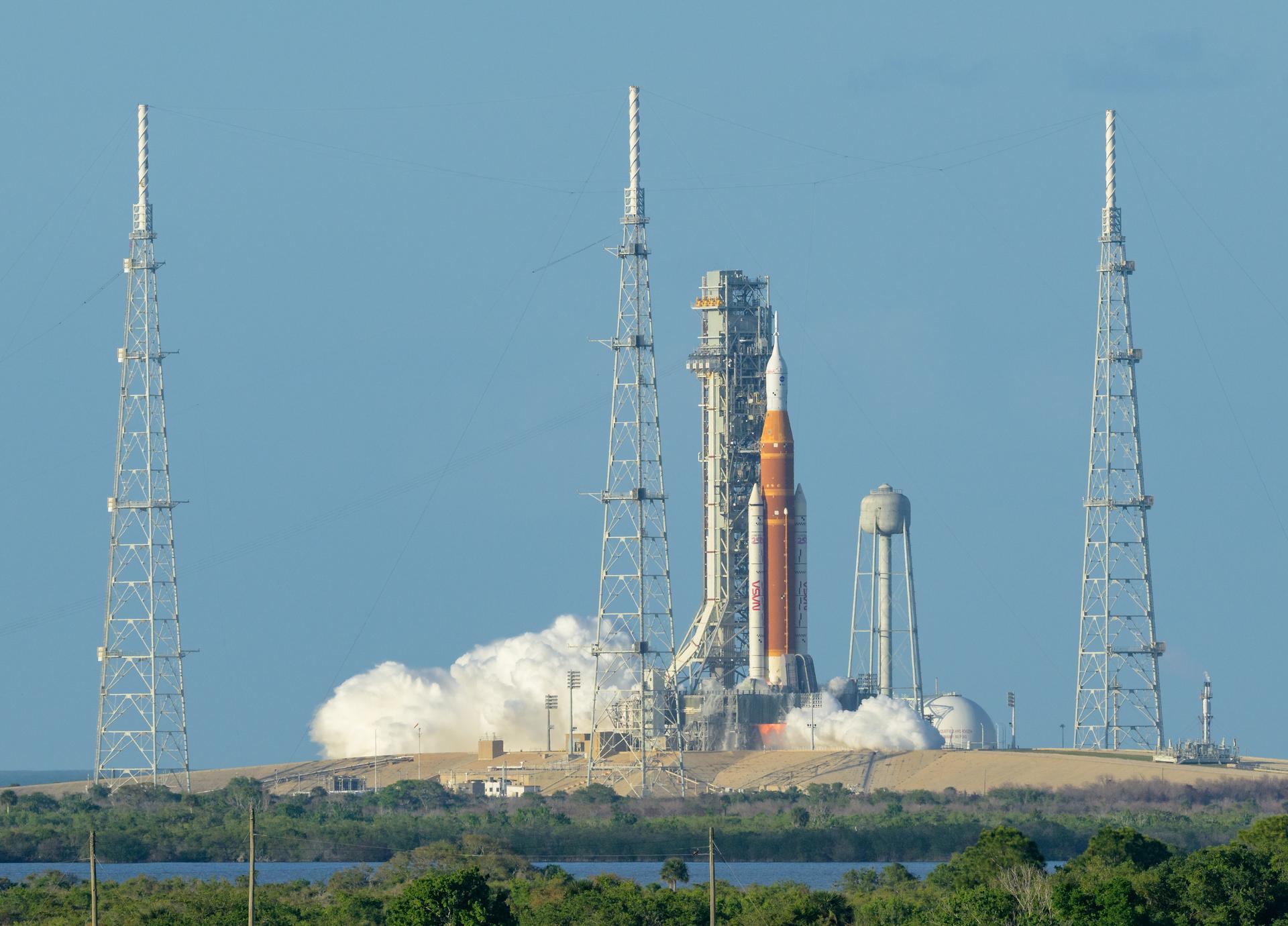
  5. The Space Launch System rocket carrying the Orion spacecraft launches from Launch Complex 39B at Kennedy Space Center on 1 April 2026.
    Space, Astronomy & Aerospace Artemis II launch of the Space Launch System rocket NASA/Bill Ingalls / HQ, Public domain. Added .
  6. Paper of the DayBiology & Ecology

    Altitude-induced hypoxia suppresses Varroa mite reproduction in Tibetan honey bees

    Varroa mites are the worst pest of honey bees, forcing beekeepers to treat colonies with mite-killing chemicals again and again, yet beekeepers on the Tibetan Plateau report rarely seeing them.

    Why it matters Varroa mites, the worst pest of honey bees, struggle to breed in the thin air above 3,500 metres, hinting at chemical-free ways to control them.

    To find out why, the researchers moved colonies between altitudes in a series of experiments and also kept low-altitude colonies under oxygen levels like those above 3,500 metres. Thin air at those heights reduced how many offspring the mites produced and halted the development of their young, so mite populations could not persist over time; the same happened in low-altitude hives kept short of oxygen. How low oxygen does this is not yet known, but the authors suggest the finding could lead to ways of controlling the mites without chemicals.

    Wei et al., PLOS Biology, 19 November 2026. doi:10.1371/journal.pbio.3004091

    Read the paper: Altitude-induced hypoxia suppresses Varroa mite reproduction in Tibetan honey bees

  7. Paper of the DayMath & Computer Science FoundationsPreprint, not yet peer reviewed

    When and why can integral constraints improve the accuracy of physics-informed neural networks?

    Physics-informed neural networks learn to solve the equations of physics by being penalised whenever they break those equations, and several studies have found that adding extra conditions, obtained by integrating the equations, makes them more accurate.

    Why it matters Integrated forms of the governing equations make physics-informed neural networks more accurate only in specific, predictable parameter ranges.

    Why this helps was poorly understood. For several partial differential equations, the kind that describe heat, waves and flowing fluids, the author worked out mathematically how tightly each training penalty controls the error. In certain parameter ranges the standard penalty barely controls some parts of the error, and the integral conditions restore that control. Numerical tests matched the prediction: the two approaches differed clearly in accuracy where the theory said they would, and performed alike where the standard penalty already kept enough control.

    Lee, arXiv cs.LG, 21 November 2026.

    Read the paper: When and why can integral constraints improve the accuracy of physics-informed neural networks?

  8. Paper of the DaySpace, Astronomy & Aerospace

    The nature of the Norma arm as a bar-driven star-forming shock front

    Maps of the Milky Way usually show four spiral arms and a central bar of stars, but the bar's size and shape are still argued over.

    Why it matters Part of what was mapped as a Milky Way spiral arm may instead be a star-forming dust lane along the Galaxy's long, slow central bar.

    One clue comes from masers, natural microwave lasers around young massive stars, which trace what has been called the Norma arm at one end of the bar. Using new computer simulations of stars and gas, the researchers argue that these million-year-old masers instead mark the bar's shock front, its dust lane, which means stars are forming there. Matching the masers to that front gives a bar whose longer half reaches about 4.3 kiloparsecs, roughly 14,000 light-years. The result suggests the bar is long and slow, and raises questions about the Galaxy's spiral structure.

    Davis et al., Nature Astronomy, 20 November 2026. doi:10.1038/s41550-026-03010-5

    Read the paper: The nature of the Norma arm as a bar-driven star-forming shock front

  9. Paper of the DayHealth & Biomedical

    Expansion and cytotoxicity of mucosal CAR + T cells in enterocolitis associated with BCMA CAR-T cell therapy

    Cilta-cel, an approved CAR-T therapy that reprograms a patient's own T cells to attack multiple myeloma, can cause a severe diarrhoea whose origin was unclear.

    Why it matters Severe diarrhoea after the myeloma therapy cilta-cel comes from the engineered T cells themselves multiplying in the gut, and differs from lymphoma.

    Among 158 patients treated at MD Anderson Cancer Center, the researchers found nine with this gut inflammation, about 5% by six months, and studied their tissue and blood. In every case the engineered T cells themselves had infiltrated the gut and were the main cause, from one or a few expanded clones, and these patients had 100 times more CAR-T cells persisting in their blood. The cells showed increased killing and inflammatory activity, but there was no sign that the inserted gene caused mutations, which sets the condition apart from lymphoma after CAR-T therapy.

    Sainz et al., Nature Medicine, 19 November 2026. doi:10.1038/s41591-026-04731-w

    Read the paper: Expansion and cytotoxicity of mucosal CAR + T cells in enterocolitis associated with BCMA CAR-T cell therapy

  10. Paper of the DayPhysics

    Analogue simulation of massive relativistic quantum fields in 2 + 1 dimensions

    Quantum field theories describe everything from particle physics to the early universe, but many of their predictions are hard to calculate, especially with more than one dimension of space.

    Why it matters Ultracold atoms can stand in for massive relativistic quantum fields in two dimensions, giving experiments a test bed for effects linked to the early universe.

    A lab system that behaves like the theory offers a way around this. The researchers used a flat cloud of ultracold atoms, a Bose-Einstein condensate, holding two coupled spin states, so that the difference between their phases acts like a relativistic field in two dimensions of space plus time. Ripples in that field behaved like particles with a mass the team could tune, and they saw domain walls, boundaries across which the phase winds through a full turn. The authors say the setup opens ways to study effects relevant to cosmology.

    Zhang et al., Nature, 18 November 2026. doi:10.1038/s41586-026-11268-y

    Read the paper: Analogue simulation of massive relativistic quantum fields in 2 + 1 dimensions

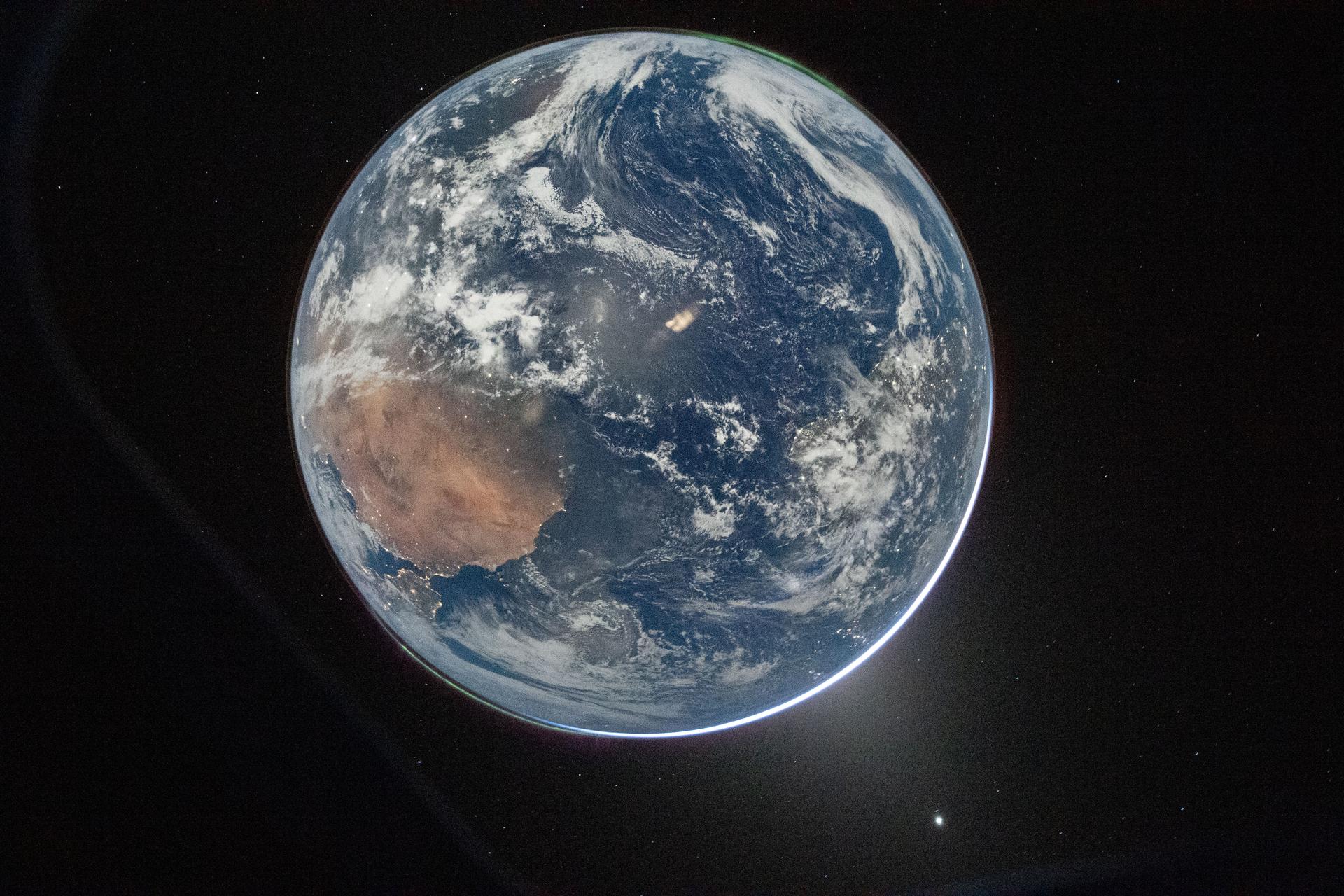
  11. Earth at night photographed from the Orion spacecraft, lit by moonlight, with green auroras along its upper left and lower right edges.
    Space, Astronomy & Aerospace Earth at night seen from the Orion spacecraft during Artemis II NASA / JSC, Public domain. Added .
  12. Paper of the DayClimate, Energy & Environment

    Climate and glacier geometry dominate global glacier–lake interactions

    Lakes that form against the front of melting glaciers can speed up ice loss, but how much they matter compared with the climate itself was unknown.

    Why it matters Glaciers that end in lakes lose ice faster, yet climate and glacier shape, more than the lakes themselves, account for most of that loss.

    The researchers mapped glacial lakes worldwide in 2000 and 2020, combining deep learning with manual checks, and estimated how much water they held. Lakes touching glaciers grew by 3,567 in number, or 35%, and glaciers ending in lakes lost ice faster than those ending on land or in the sea. Even so, the lakes explained only about 11% of that loss, while climate and the shape of the glaciers themselves accounted for roughly 43% and 46%. The authors say the findings should improve projections of water availability in glaciated mountain regions as warming continues.

    Zhao et al., Nature Climate Change, 20 November 2026. doi:10.1038/s41558-026-02808-5

    Read the paper: Climate and glacier geometry dominate global glacier–lake interactions

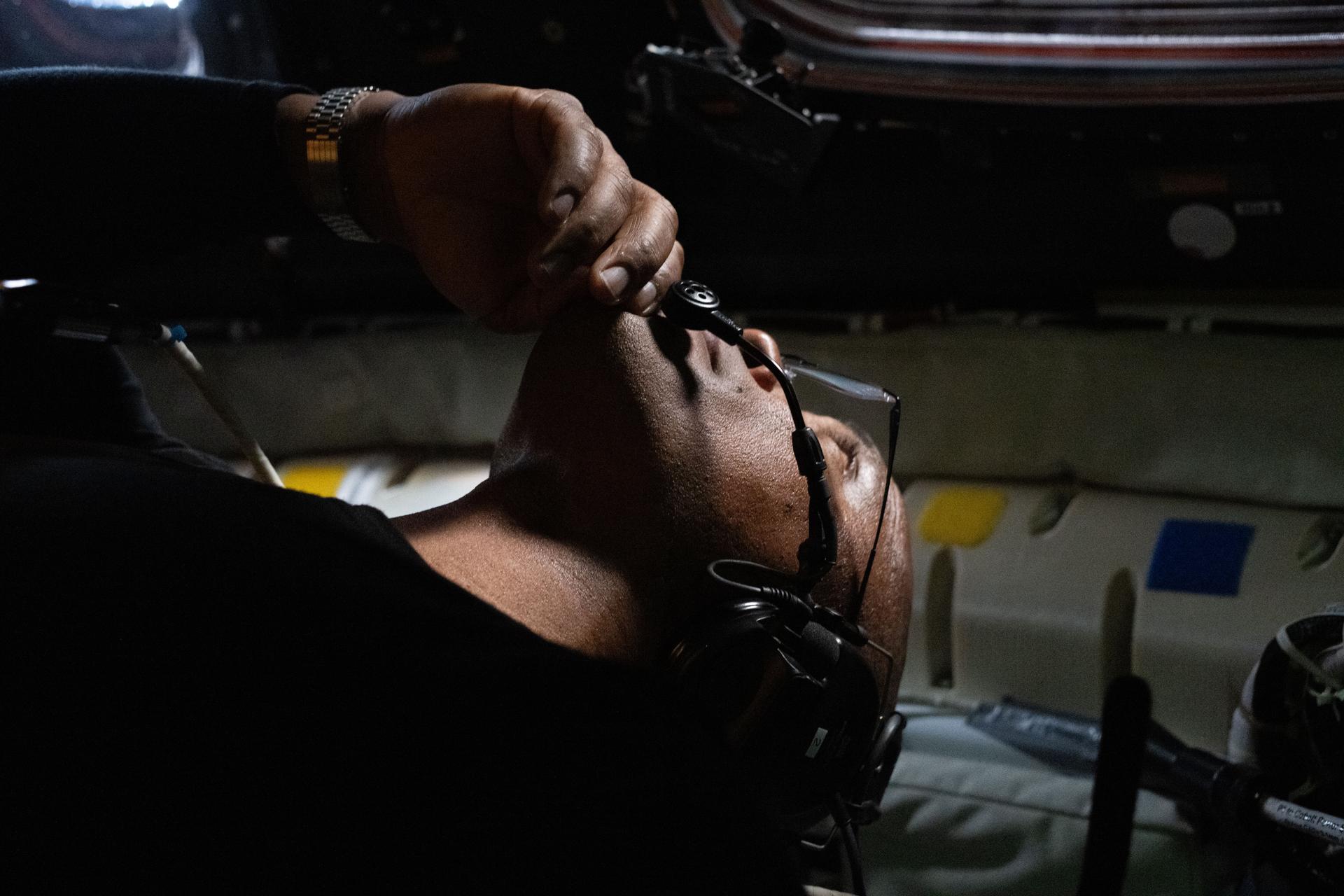
  13. Astronaut Victor Glover inside the Orion spacecraft during the Artemis II lunar flyby, on 6 April 2026.
    Space, Astronomy & Aerospace Astronaut Victor Glover at an Orion window during the Artemis II lunar flyby NASA / JSC, Public domain. Added .