
STEM Synapse 中文

Latest in STEM

Monday 23 November

  1. Paper of the DayAI & Machine Learning

    Flexible Modeling of Information Diffusion on Networks with Statistical Guarantees

    How far a rumour, a product or a habit travels through a social network depends on the strength of each connection, and those strengths are almost never known directly.

    Why it matters Connection strengths in a network can be estimated from past cascades with a proven error bound, sharpening predictions of who will spread what.

    Estimators exist for particular models of spreading, but without guarantees about how far off they might be. These researchers define a broad family of spreading models that contains two of the most used ones, and estimate connection strengths from records of how past cascades travelled. They prove a bound on the error from a finite sample and show the estimates behave predictably as data grows. On simulated and real networks, the method improved predictions of who becomes active and the choice of which people to seed.

    Kagan et al., JMLR, 22 November 2026.

    Read the paper: Flexible Modeling of Information Diffusion on Networks with Statistical Guarantees
  2. Paper of the DayChemistry & Materials Science

    Synergistic Salt‐Bridge and Hydrophobic Interaction‐Driven Supramolecular Adhesives Enable Ultrastrong Dry/Underwater Bonding and Broad Harsh‐Condition Adaptability: Polyelectrolyte‐Templated Multi‐Promoting Effects

    Glue struggles underwater for a simple reason: a film of water sits between the adhesive and the surface and blocks the bonds that would hold them together, so adhesives that grip well when dry tend to fail when wet.

    Why it matters An adhesive combining salt bridges with water-repelling groups grips quickly and strongly underwater as well as dry, where a water film usually defeats glue.

    These researchers used branched, positively charged polymers as scaffolds carrying many binding sites close together, and paired them with flexible water-repelling groups. The scaffold encourages dense salt bridges between opposite charges, helps the liquid spread over a surface and lets it harden quickly without solvent. The authors report fast, strong bonding both dry and underwater, and say the joints tolerate harsh conditions.

    Lin et al., Advanced Materials, 21 November 2026. doi:10.1002/adma.75820

    Read the paper: Synergistic Salt‐Bridge and Hydrophobic Interaction‐Driven Supramolecular Adhesives Enable Ultrastrong Dry/Underwater Bonding and Broad Harsh‐Condition Adaptability: Polyelectrolyte‐Templated Multi‐Promoting Effects

  3. Paper of the DayPsychology & Cognitive Science

    Effects of specialised and centralised versus generalised and decentralised outpatient treatment for progressed bipolar disorder: Results from the CAG Bipolar randomised controlled trial

    People whose bipolar disorder has progressed are treated either at a specialist centre or by general community services, and the two had not been compared head to head in a randomised trial.

    Why it matters Treating advanced bipolar disorder at a specialist centre rather than general community care did not cut hospital admissions over a year.

    Here 1,134 patients were assigned at random to a specialised, centralised outpatient clinic that brings care together with research, teaching and training, or to generalised community-based care, and followed for a year. Admissions to psychiatric hospital did not differ between the groups, and neither did the days spent there. Patients at the specialised clinic were more likely to be prescribed lithium, by about a fifth, and antipsychotics, quetiapine in particular.

    Kessing et al., Psychological Medicine, 20 November 2026. doi:10.1017/s0033291726106606

    Read the paper: Effects of specialised and centralised versus generalised and decentralised outpatient treatment for progressed bipolar disorder: Results from the CAG Bipolar randomised controlled trial

  4. Paper of the DayTech & Engineering

    An extracellular contractile injection system for receptor-mediated protein delivery into plant cells

    Getting a working protein inside a plant cell is one of the stubborn obstacles in plant biotechnology, because the tough cell wall and membrane keep large molecules out.

    Why it matters A bacterial injection machine retargeted to a plant surface receptor can carry proteins, a gene editor among them, straight into living leaf cells.

    Some bacteria already solve this problem: Photorhabdus carries a syringe-like nanomachine, related to the tail of a virus, that injects proteins into insect cells. The researchers rebuilt the tips of that machine to recognise a receptor on the plant cell surface, then loaded it with cargoes including a gene-editing protein. Delivery into thale cress and tobacco leaf cells reached 16% of cells, and 75% in plants engineered to carry extra receptor, with a reporter gene inserted and switched on.

    Legendre et al., Nature Nanotechnology, 18 November 2026. doi:10.1038/s41565-026-02323-w

    Read the paper: An extracellular contractile injection system for receptor-mediated protein delivery into plant cells

  5. Paper of the DayBiology & Ecology

    Bogong moths navigate with a light-dependent geomagnetic inclination compass

    Bogong moths fly up to 1,000 kilometres each way between their breeding grounds and a few cool caves in the Australian Alps, and they hold their course on nights when cloud hides the stars they usually steer by.

    Why it matters Night-migrating moths steer by the tilt of Earth's magnetic field and need blue light to do it, evidence for a light-driven magnetic sense.

    To find out what replaces the stars, the researchers tethered moths in a flight arena under an artificial random night sky and altered the magnetic field around them. The moths kept their inherited migratory heading using the field alone; turning the field halfway round, or inverting its tilt, turned them around. Removing violet and blue light, or adding weak radio waves, abolished the orientation.

    Chen et al., Nature, 18 November 2026. doi:10.1038/s41586-026-11322-9

    Read the paper: Bogong moths navigate with a light-dependent geomagnetic inclination compass

  6. Paper of the DayMath & Computer Science FoundationsPreprint, not yet peer reviewed

    Differentially Private Score Estimation with Applications to Score-Based Generative Models

    Generative models of images or text often learn a quantity called the score, a field of directions pointing towards where data is dense.

    Why it matters Learning a distribution's score under a formal privacy guarantee costs accuracy by a quantified amount, close to the limit any private method can reach.

    Learning it from sensitive records is risky, because such models can memorise individual examples and later give them up to attacks. How well a score can be learned while a formal privacy guarantee holds was not well understood. These authors build an estimator that fits smooth piecewise polynomials and picks among them by a randomised rule, running in time that grows only polynomially with the number of examples, and they prove both its error rate and a nearly matching limit for any private method.

    Gao et al., arXiv cs.LG, 21 November 2026.

    Read the paper: Differentially Private Score Estimation with Applications to Score-Based Generative Models

  7. Paper of the DaySpace, Astronomy & Aerospace

    Evolving Dark Energy Is Vacuum Energy After All

    Recent surveys hint that dark energy, the push making cosmic expansion speed up, has not stayed constant through the history of the universe.

    Why it matters Dark energy that changes with time may need no new particle, only the vacuum of the strong nuclear force reacting to an expanding universe.

    Explanations usually add a new field to physics, which brings instabilities of its own. Here dark energy instead comes from the vacuum of the strong nuclear force responding to an expanding spacetime, adding no new particle or field, and the authors work out its cosmology and test it against the cosmic microwave background, the imprint of sound waves in the early universe, and supernovae. The fit matches what the surveys prefer, and by Bayesian comparison the model came out ahead of a constant dark energy.

    Lee et al., Astrophysical Journal, 20 November 2026. doi:10.3847/1538-4357/aeb9cc

    Read the paper: Evolving Dark Energy Is Vacuum Energy After All

  8. Paper of the DayHealth & BiomedicalPreprint, not yet peer reviewed

    Elevated maternal hemoglobin levels during pregnancy are associated with autism spectrum disorder in the offspring: A population-based cohort study

    Anaemia in pregnancy, meaning too little haemoglobin in the blood, has long been linked to difficulties in children's development, while much less is known about haemoglobin at the high end.

    Why it matters Higher-than-usual haemoglobin early in pregnancy is associated with modestly raised odds of an autism diagnosis in the child, in one large records study.

    This preprint used health records for 303,234 single births in Israel from 2011 to 2021, comparing children whose mothers measured high in the first or second trimester with those in the normal range and adjusting for maternal age, weight, gestational diabetes and social circumstances. Of all the children, 2.7% were later diagnosed with autism; high haemoglobin was associated with 22% higher adjusted odds, and the authors note that data on some factors were missing.

    Dichter et al., medRxiv, 20 November 2026. doi:10.64898/2026.11.15.26368133

    Read the paper: Elevated maternal hemoglobin levels during pregnancy are associated with autism spectrum disorder in the offspring: A population-based cohort study

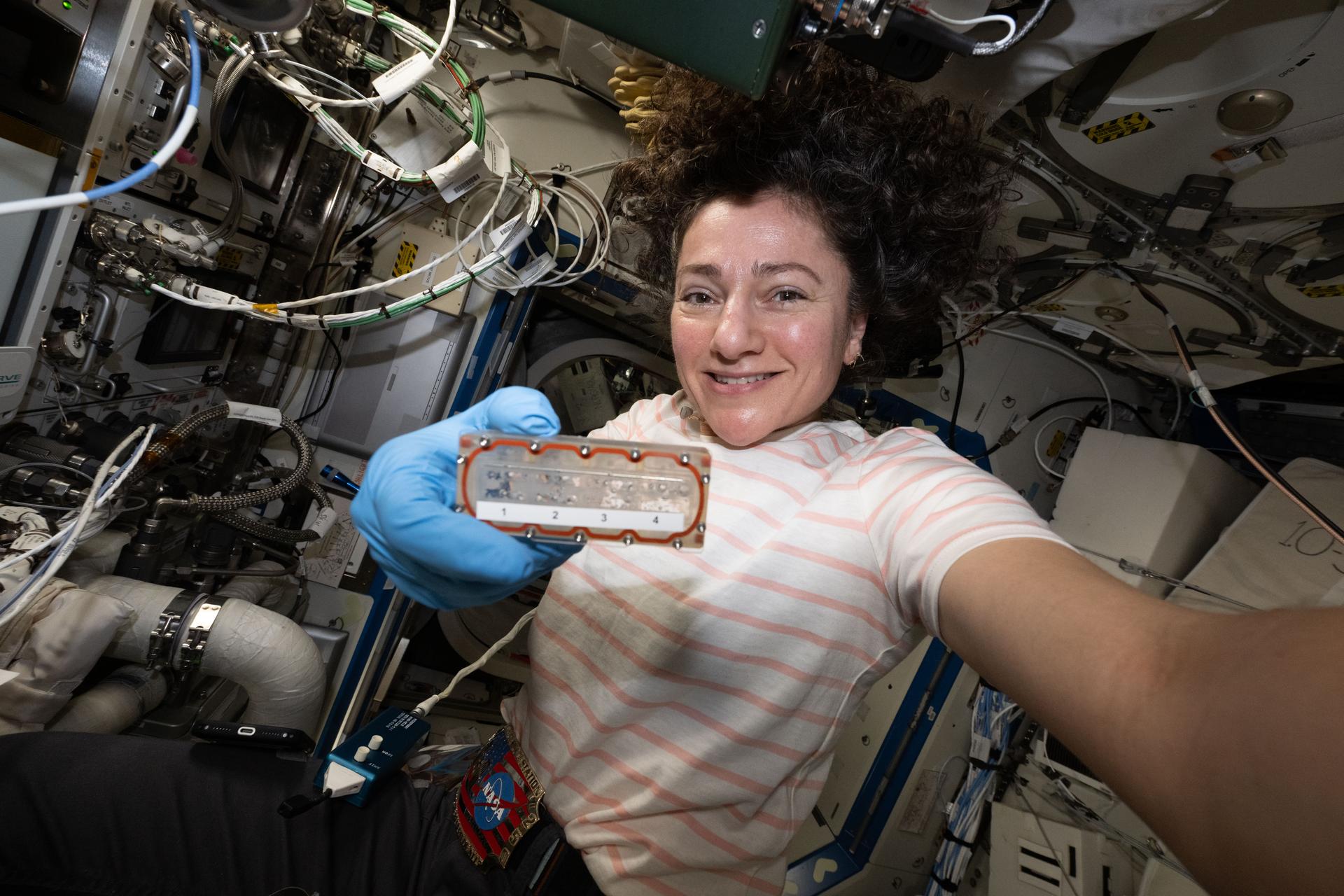
  9. Astronaut Jessica Meir shows a tissue chamber for the NEMO microscope inside the International Space Station's Destiny module.
    Health & Biomedical NASA astronaut Jessica Meir shows off a tissue chamber that houses samples NASA JSC, Public domain. Added .
  10. Paper of the DayPhysics

    Flat-band-induced integer doping and phase transition in monolayer graphene

    Stacks of crystals one atom thick are held together by weak forces rather than chemical bonds, so the sheets can slide, turn and settle into competing arrangements.

    Why it matters A voltage can switch how atom-thin sheets stack and, with it, the exact charge graphene holds, giving control over flat electron bands made by strain.

    Steering that choice on demand had not been managed. Here a single sheet of graphene was sandwiched between bulk and single-layer boron nitride, both aligned with it, and a gate voltage, a magnetic field or a change of temperature flipped the whole stack from one crystal symmetry to another, visible under a scanning tunnelling microscope. The electrical state flipped with it, the graphene holding a whole number of electrons per repeating cell of the interference pattern between the layers.

    Wang et al., Nature, 18 November 2026. doi:10.1038/s41586-026-11254-4

    Read the paper: Flat-band-induced integer doping and phase transition in monolayer graphene

  11. Paper of the DayClimate, Energy & Environment

    Targeted technology coadoption for reconciling energy savings and equity gains in the residential energy transition

    Solar panels, electric cars and heat pumps are all meant to arrive in homes together, and which homes get them depends on what the support is aimed at.

    Why it matters Rooftop solar directed at households spending the most of their income on energy delivers bigger fairness gains than electric cars or heat pumps do.

    Using machine learning on data from 17,900 households, the researchers compared aiming at lower energy use and cost with aiming at the share of income households spend on energy. The first sent the technologies to the usual early adopters, wealthier owners of single-family houses, and clustered them geographically. The second redirected them to underserved households and spread them out, with rooftop solar giving the strongest gain in fairness, and more again when the technologies came in combination.

    Min et al., Nature Energy, 18 November 2026. doi:10.1038/s41560-026-02164-w

    Read the paper: Targeted technology coadoption for reconciling energy savings and equity gains in the residential energy transition

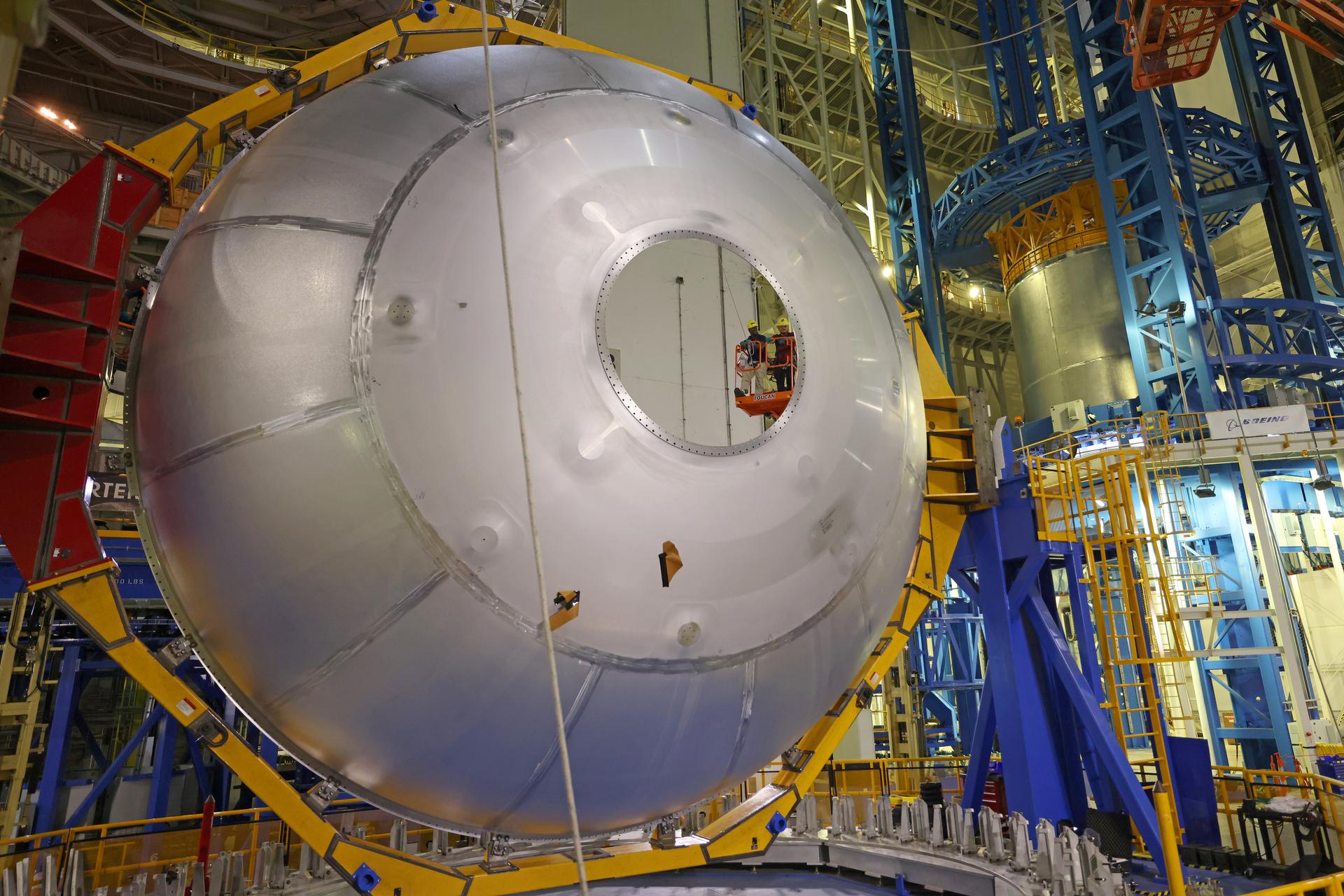
  12. Teams at NASA’s Michoud Assembly Facility lift the aft dome of the Artemis IV liquid oxygen tank into the Vertical Assembly Center.
    Tech & Engineering Dome Added to Artemis IV Liquid Oxygen Tank NASA/Michael DeMocker / MAF, Public domain. Added .