
STEM Synapse 中文

Latest in STEM

Tuesday 24 November

  1. Paper of the DayAI & Machine LearningPreprint, not yet peer reviewed

    Language Diffusion Models are Associative Memories Capable of Retrieving Unseen Data

    Diffusion language models write by cleaning up a noisy jumble of words, raising a question: when are they repeating their training text, and when are they producing something new?

    Why it matters How unsure a diffusion language model is about each word it predicts can reveal whether it is copying its training text or generalizing beyond it.

    The researchers treated one family of these models as an associative memory, a system that settles into stored patterns the way a ball rolls into a valley. Testing how well the models recovered words from training and unseen texts, they found a sharp switch set by the amount of training data: as it grows, the valleys around training examples shrink and those around new examples widen until both match. The switch shows up in how uncertain the model is about each word, which the authors propose as a check for memorization.

    Pham et al., arXiv stat.ML, 23 November 2026.

    Read the paper: Language Diffusion Models are Associative Memories Capable of Retrieving Unseen Data
  2. Paper of the DayChemistry & Materials Science

    High‐Efficiency Solution‐Processed Sensitized OLEDs With Low Roll‐Off Enabled by Near‐Ultraviolet Emissive Thermally Activated Delayed Fluorescent Polysiloxanes

    Making efficient blue organic light-emitting diodes by printing them from solution, a cheaper route than depositing materials in a vacuum, remains difficult.
    Why it matters Printed blue organic LEDs, cheaper to make than vacuum-deposited ones, can come close to top efficiencies using a new family of silicone-based glowing polymers.

    The researchers built polymers on a flexible silicon-oxygen backbone, known as polysiloxanes, carrying groups that glow in the near-ultraviolet through a process that recovers energy normally wasted as heat. These polymers can act as the light emitter, as the host around it, or as a helper that hands energy to another emitter. Used as a helper in a printed blue device, they reached a peak efficiency of 35.7 percent, among the best for polymer devices of this type. The backbone, the authors conclude, is an effective design lever.

    Jiang et al., Advanced Materials, 23 November 2026. doi:10.1002/adma.75836

    Read the paper: High‐Efficiency Solution‐Processed Sensitized OLEDs With Low Roll‐Off Enabled by Near‐Ultraviolet Emissive Thermally Activated Delayed Fluorescent Polysiloxanes

  3. Paper of the DayPsychology & Cognitive Science

    Linguistic contextualization in the human hippocampus

    Words change meaning with their neighbours, and large language models handle this with self-attention, which blends each word with weighted contributions from nearby words.

    Why it matters Neurons in the human hippocampus blend each heard word with the words that came before it, much as language models weigh context when processing text.

    Does the brain do something similar? They recorded the firing of single neurons in the hippocampus, a brain region involved in meaning and context, in 10 people listening to podcasts. Neurons tracked each word's position within its clause, and their response to a word reflected both its own meaning and a weighted mix of the words before it. Those weights lined up with the attention weights of a language model. The authors suggest the brain adds context in a way resembling attention in such models, with the hippocampus playing a part in language.

    Katlowitz et al., Nature Human Behaviour, 23 November 2026. doi:10.1038/s41562-026-02543-z

    Read the paper: Linguistic contextualization in the human hippocampus

  4. Paper of the DayTech & Engineering

    Depth-robust super-resolution nanofabrication for 3D mesoscopic photonic structures

    Laser writing can print three-dimensional optical parts with details far finer than the wavelength of light, but the trick stops working deep inside the material, where the beams are bent and distorted.

    Why it matters Tiny lenses and other optical parts can be laser-printed with fine detail more than a millimetre deep inside a material, not only near its surface.

    The technique uses a second beam that switches off the writing everywhere except a narrow centre, and at depth that beam drifts out of line with the writing beam. The researchers used a long, narrow beam shape that can be tuned so the two stay aligned. They kept lines about 167 nanometres wide even 1.4 millimetres deep, and used the method to build miniature lenses, lens arrays and microscope objectives. Thick optical systems could therefore be printed as a single piece.

    Li et al., Nature Nanotechnology, 23 November 2026. doi:10.1038/s41565-026-02335-6

    Read the paper: Depth-robust super-resolution nanofabrication for 3D mesoscopic photonic structures

  5. Paper of the DayBiology & Ecology

    A shared meaning component across languages in the human brain

    The world's languages differ hugely in sounds, words and grammar, yet all carry complex meaning, and it has been unclear whether the brain handles meaning in the same way across them.

    Why it matters Brain activity for meaning follows a pattern shared across languages, so a model trained on some languages can predict responses to languages it never saw.

    The researchers used brain scans of speakers of 21 languages from several language families, combining earlier recordings with new ones. Multilingual computer language models, which place many languages in one shared space, were used to predict each person's brain activity. The predictions worked within each language and, crucially, models trained on some languages predicted brain responses in languages they had never been given. This held across language families, kinds of material and ways of presenting it, pointing to a component of meaning that human brains share across languages.

    Varda et al., Nature Neuroscience, 23 November 2026. doi:10.1038/s41593-026-02523-6

    Read the paper: A shared meaning component across languages in the human brain

  6. Paper of the DayMath & Computer Science FoundationsPreprint, not yet peer reviewed

    The maximum area of a snake polyomino in a 12 × n rectangle

    A snake polyomino is a chain of squares on a grid, each joined to the next along an edge and touching no other square in the chain: how long can one be inside a rectangle?.

    Why it matters The longest self-avoiding snake of squares that fits in a grid is now known exactly for every rectangle up to 12 squares tall.

    Exact answers were known only for rectangles up to five squares tall, and a formula for height 12, posted to an online catalogue of number sequences in July 2026, had remained unproved. The author proves it. The upper limit comes from tracking possible column patterns, where one inequality, once checked, carries over to every longer rectangle; the matching snakes are built explicitly. The same method settles every height up to 12, including heights six to eleven, which had no formula before.

    Niu, arXiv math.CO, 23 November 2026.

    Read the paper: The maximum area of a snake polyomino in a 12 × n rectangle

  7. Paper of the DaySpace, Astronomy & Aerospace

    Field-level Inference from Galaxies: Baryon Acoustic Oscillation Reconstruction

    Galaxies are spread through space with a faint preferred spacing, a ripple left by sound waves in the early universe, and measuring it is one of cosmology's main rulers for how the universe has expanded.

    Why it matters Galaxy surveys can measure the universe's expansion more precisely, without adding bias, by rebuilding the early matter distribution from the full galaxy map.

    Gravity has since smeared the ripple, so surveys first try to undo the blurring. The researchers compared the standard way of doing this with two newer approaches that rebuild the early distribution of matter from the whole galaxy map, one using a detailed physical model and one a neural network. On simulated catalogues resembling those of the DESI survey, the newer methods tightened the measurement by up to 46 percent. Extensive tests on mock universes showed the results were unbiased and their error bars trustworthy.

    Bayer et al., Astrophysical Journal, 23 November 2026. doi:10.3847/1538-4357/aea4a7

    Read the paper: Field-level Inference from Galaxies: Baryon Acoustic Oscillation Reconstruction

  8. Paper of the DayHealth & Biomedical

    Architecture of the poxvirus early-transcription machinery and portal complex

    Poxviruses, the family that includes the vaccinia virus used in smallpox vaccines, carry their own machinery for reading their genes inside a protein shell called the core, and start making messages almost as soon as they enter a cell.

    Why it matters Poxviruses keep their gene-reading machinery in pairs tied to their DNA, beside an exit channel in the core wall, ready to work inside a cell.

    How that machinery is arranged inside the virus was unknown. The researchers froze purified vaccinia cores and imaged them in 3D with an electron microscope. The gene-reading enzyme sits not alone but in large pairs, some tied by two other proteins to the packed DNA near the core wall. They also mapped a three-layered channel in the wall suited to pushing messages out. These structures give a blueprint for studying how poxviruses pack and switch on their genes.

    Arragain et al., Nature, 23 November 2026. doi:10.1038/s41586-026-11458-8

    Read the paper: Architecture of the poxvirus early-transcription machinery and portal complex

  9. Paper of the DayPhysics

    Quantum position verification with remote untrusted devices

    Proving that a message really comes from a particular place is hard, because classical methods can be spoofed and earlier quantum schemes required trusting the quantum hardware itself.

    Why it matters A location can be verified using quantum correlations alone, without trusting the equipment, which could tie digital authentication to a real physical place.

    The researchers demonstrated a scheme whose security rests only on the outcome of a Bell test, a measurement of correlations between entangled particles that no classical system can imitate, carried out across a quantum network. They tested it against cheaters who share a small amount of entanglement before each round. The scheme pinned down position along one line 2.47 times more tightly than the best classical method can. The authors argue this lets digital security, such as authentication for financial transactions, be anchored to physically trusted locations.

    Kavuri et al., Nature, 18 November 2026. doi:10.1038/s41586-026-11247-3

    Read the paper: Quantum position verification with remote untrusted devices

  10. Paper of the DayClimate, Energy & Environment

    Contouring mitigates voiding at the lithium/ceramic electrolyte interface on discharging solid-state batteries

    Solid-state batteries with lithium metal could hold more energy than today's cells, but as they discharge, gaps open where lithium meets the ceramic electrolyte, and these gaps stop the battery from working.

    Why it matters Solid-state lithium batteries can deliver the bursts of current that real driving demands when the metal-electrolyte boundary is shaped like an egg box.

    The researchers shaped that boundary into an egg-box pattern of bumps and hollows instead of a flat surface. This raised the discharge current at which gaps begin to form tenfold, from 0.2 to 2 milliamps per square centimetre under modest pressure. The contoured cells did not prevent gaps entirely but kept them from growing, and they survived discharge patterns modelled on real electric-vehicle driving, while flat cells failed quickly. A full cell with a thin contoured electrolyte kept the same advantage.

    Zhang et al., Nature Energy, 23 November 2026. doi:10.1038/s41560-026-02172-w

    Read the paper: Contouring mitigates voiding at the lithium/ceramic electrolyte interface on discharging solid-state batteries

  11. Webb mid-infrared image of the supernova remnant Cassiopeia A, showing the hot dust that makes up the remnant.
    Space, Astronomy & Aerospace Cassiopeia A seen by Webb's mid-infrared camera ESA/Webb, CC BY. Added .
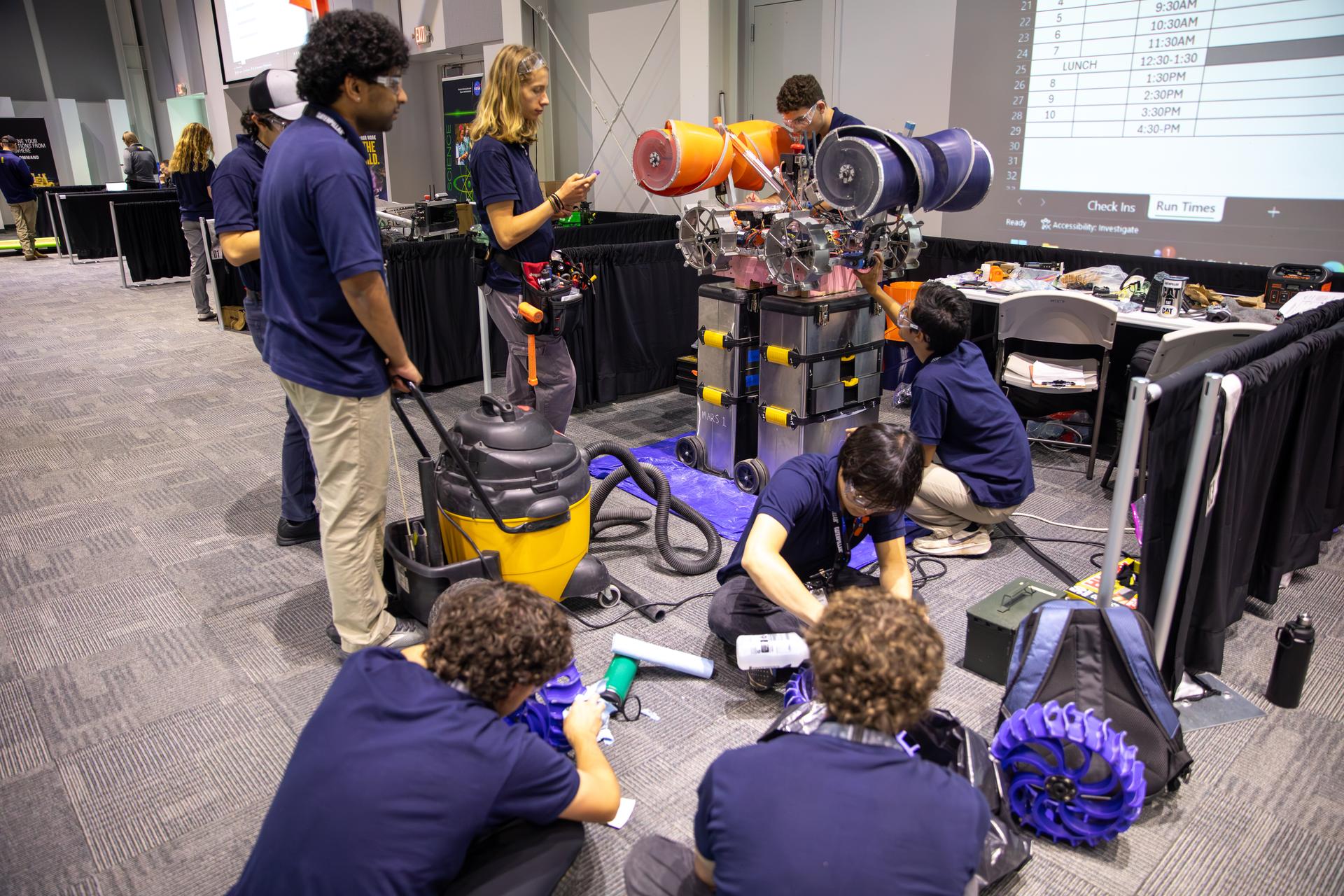
  12. Students from the University of Virginia prepare a prototype lunar robot at the NASA Lunabotics finals in Florida.
    Tech & Engineering Lunabotics Robotic Mining Competition NASA/Ben Smegelsky / KSC, Public domain. Added .
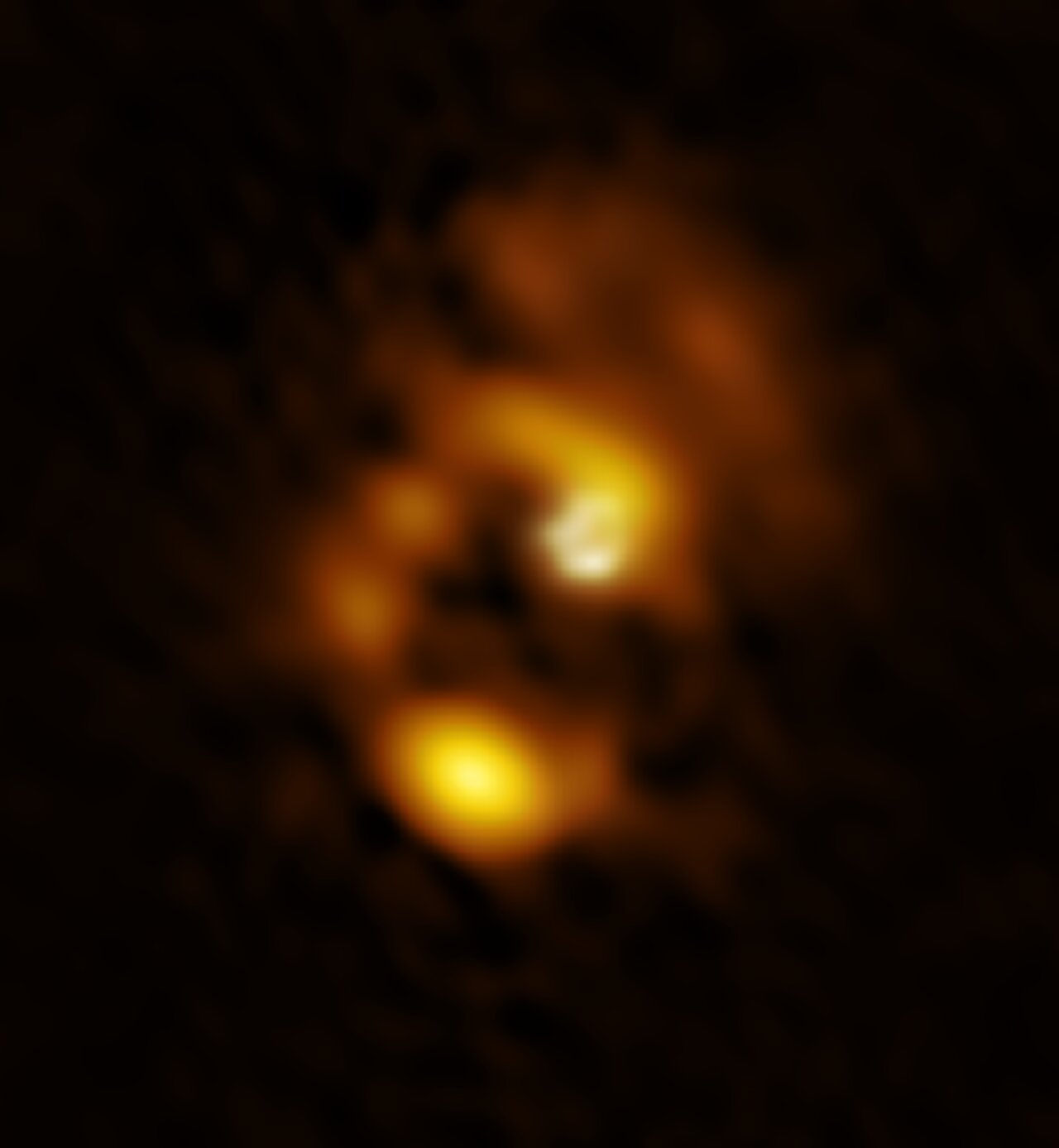
  13. ALMA image of the red giant star Mira A, with a giant loop of material ejected far from the star.
    Space, Astronomy & Aerospace Mira A, a red giant star, and a loop of ejected material seen by ALMA ESO, CC BY. Added .